Exacta Betting for Beginners: First Bet to First Winner
 Available in US
My first ever exacta bet was a disaster – and it was the best education I could have asked for. I boxed four horses in a 16-runner handicap at Newmarket, paid 12 for the pleasure, watched my third and fourth selections finish first and second, and collected 186. The dividend per 1 unit was 186, but I had covered 12 combinations, so my actual return was 186 on a 12 outlay. Still profitable, but the penny dropped: understanding what you are paying for matters as much as picking the right horses. This guide takes you from zero to your first informed exacta bet, covering the mechanics, the costs, and the thinking that separates beginners from bettors.
What an Exacta Actually Is
You walk into a pub quiz, and someone asks you to predict not just the winner but who comes second, in the right order. That is an exacta – picking the first and second horse in a race, in the correct finishing order. Get both positions right and you collect. Get either one wrong, or get the order reversed, and you lose. See also: horse racing exacta bet for beginner resources.
The Tote operates the UK’s exacta pools. Every pound staked on an exacta in a given race goes into a single pool. The Tote takes a 25% deduction as its cut, and the remaining 75% is divided among all winning tickets. The payout – called the dividend – is expressed as the return per 1 unit wagered on the correct combination. If the dividend is declared at 45.20, a 1 winning bet returns 45.20. A 2 winning bet returns 90.40.
This pool structure is fundamentally different from fixed-odds betting with a bookmaker. With a bookmaker, your odds are locked in when you place the bet. With the Tote Exacta, your return depends on how much money the pool collected and how much of it was placed on the winning combination. The dividend is not known until after the race, when the pool closes and the result is confirmed.
Placing Your First Bet Online
I wasted twenty minutes on my first attempt because I was looking for a button labelled “Exacta” and the Tote interface used “Forecast” in some places. Save yourself the confusion: Exacta and Forecast mean the same thing on the Tote platform. The steps are simple once you know where to look.
Register an account on the Tote website or app. You need standard identity verification – name, date of birth, address, and potentially photo ID. Once verified, deposit funds via debit card or bank transfer. Credit cards are banned for gambling across all UK-regulated operators.
Navigate to the race you want to bet on, select the Exacta or Forecast bet type, then tap your first-place selection followed by your second-place selection. The interface highlights each position in a different colour. Set your unit stake – the minimum online is typically 10p – and confirm. Online gambling gross gaming yield hit 7.8 billion in the year to March 2025, and pool betting’s digital infrastructure has matured alongside that growth. The Tote’s interface is clean and functional once you find the right tab.
Understanding Costs Before You Commit
The trap that catches every beginner is the gap between unit stake and total cost. A “1 exacta” sounds like it costs 1. It does – if you are placing a single straight combination. But the moment you box or wheel your selections, the combination count multiplies and so does the cost.
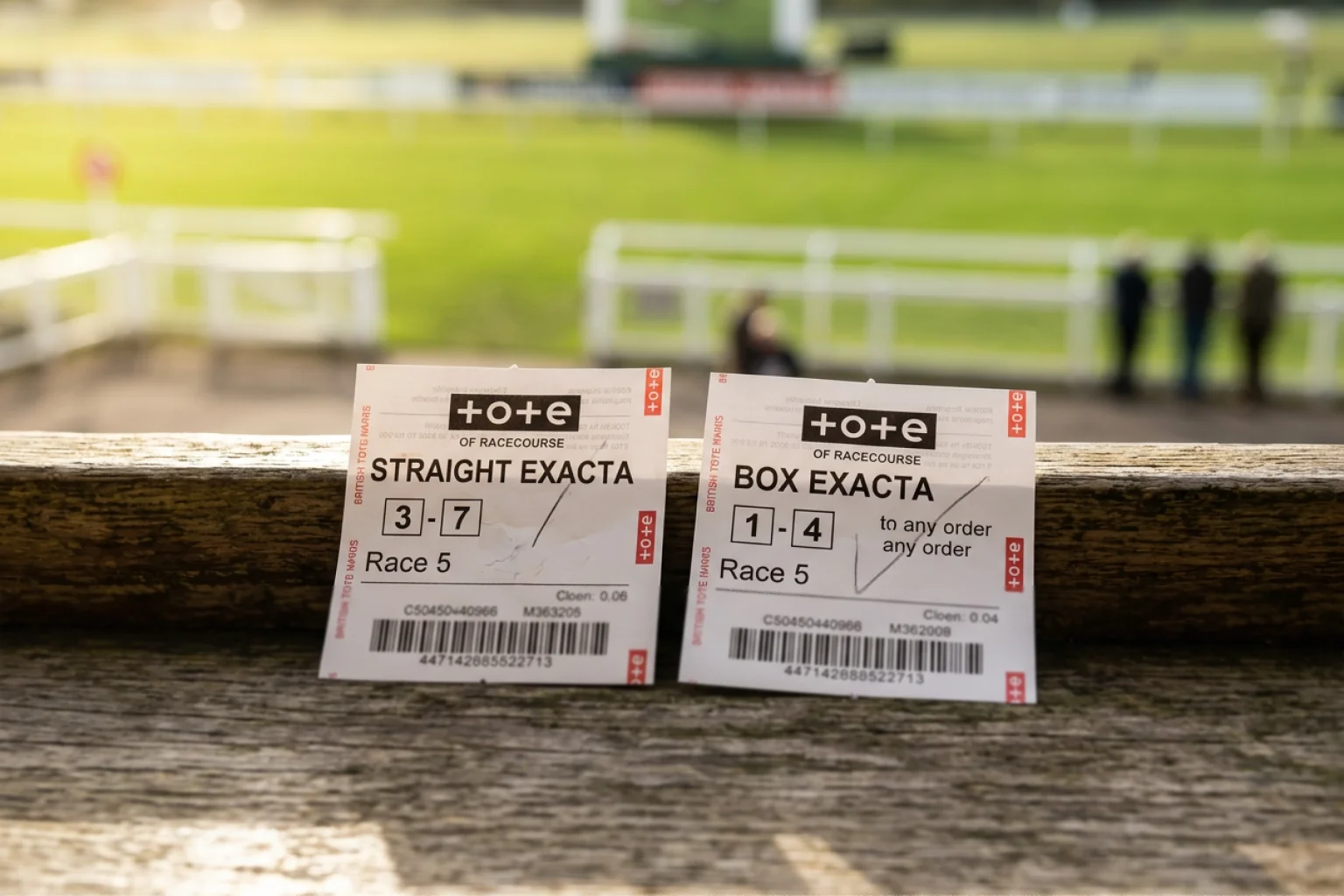
A straight exacta – Horse A first, Horse B second – is one combination. Cost: 1 x your unit stake. A box of two horses – A first B second OR B first A second – is two combinations. Cost: 2 x your unit stake. Boxing three horses creates six combinations. Boxing four horses creates twelve. Boxing five creates twenty. At 1 per combination, a five-horse box costs 20.
The total cost is always displayed before you confirm your bet. Read it. I cannot stress this enough – read the total cost before you hit confirm. I have seen novice bettors at the track place a 2 box on six horses and not realise until the receipt printed that they had just committed 60. The maths is simple: for a box, the number of combinations equals N x (N-1), where N is the number of horses selected. But simple maths is easy to overlook in the excitement of race day.
Picking Your First Selections
Forget systems, forget algorithms, forget the bloke at work who “always backs winners.” Your first exacta should be built on one clear opinion: which horse do you think will win this race?
Start with a race you have studied – not a random punt on the next one off. Read the form, look at recent finishes, check the going preference, and note the jockey booking. If one horse stands out as the likely winner, that is your anchor. For the second position, ask a different question: if my winner leads or is competitive, which horse is most likely to be just behind? Often it is not the second favourite – it is a horse that has been running into the places consistently without winning, or one dropping in class and likely to be competitive without quite being good enough to win.
Your first exacta should be a straight bet – one combination, minimal cost. If Horse A is your winner and Horse B your runner-up, place 1 (or less online) on A first, B second. If you are right, you collect the full dividend on one unit. If you are wrong, you lose 1 and learn something about your selection process. Beginners who jump straight to multi-horse boxes are spending more to learn slower.
What to Do After the Race
Win or lose, the race result teaches you something. If you won, note the dividend and compare it to what a simple win bet would have returned on your first selection. The gap between those two figures is the premium the exacta paid for the extra difficulty of getting the runner-up right. Over time, tracking this premium tells you which race types produce the best exacta value relative to win betting.
If you lost, diagnose why. Did your winner fail to win? That is a selection problem, not an exacta problem – your form assessment needs refining. Did your winner win but your runner-up finished third or worse? That is an exacta-specific problem, and the fix is expanding your second-place candidates without inflating costs. A part-wheel – keying your winner in first and including three runners for second – is the next step up from a straight bet, costing three combinations instead of one.
Record every bet. A simple spreadsheet with the date, race, selections, stake, cost, dividend, and return will give you an honest picture of your exacta performance after twenty or thirty bets. Favourites win 30-35% of UK races overall, and exacta strike rates are substantially lower because you need two positions correct. Do not expect to win often – expect to win enough, at high enough dividends, to show a profit over a meaningful sample. The staking plan guide covers how to structure your bankroll to withstand the inevitable losing runs while capitalising on the big dividends when they arrive.
Three Mistakes Every Beginner Makes
The first mistake is over-boxing. Beginners love the safety net of covering every permutation, but the cost erodes profit margins on all but the longest-priced results. A four-horse box at 1 per combination costs 12. The exacta dividend needs to exceed 12 just to break even. In a competitive 10-runner handicap that is achievable; in a six-runner Group race with a clear favourite, the dividend is often under 12 for the most likely outcomes.
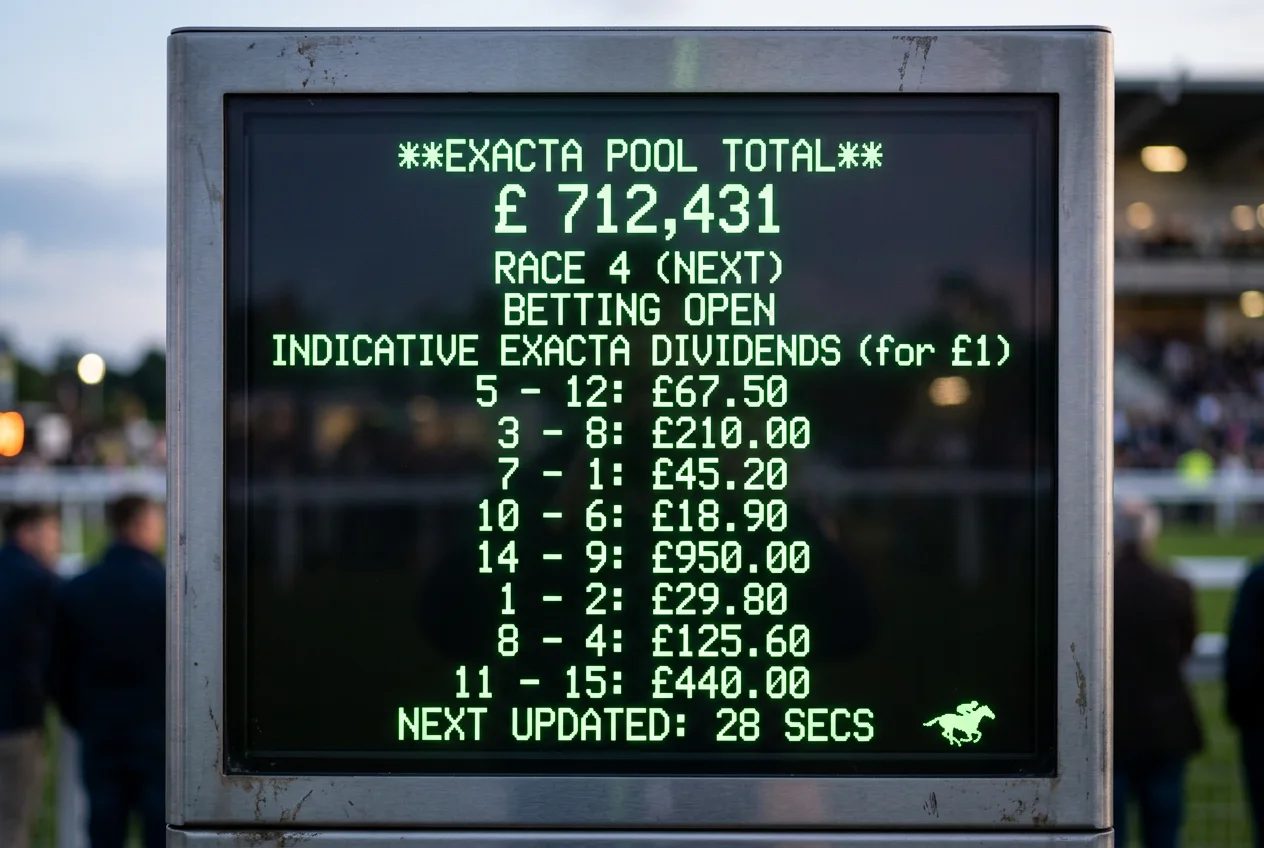
The second mistake is ignoring the pool. The Tote shows indicative dividends before the race, and they update as money enters the pool. If the indicative dividend on your combination is 8 and your box cost you 12, the maths says you will lose money even if you are right. Checking the indicative figures takes ten seconds and prevents the most elementary errors of bet sizing.
The third mistake is betting every race. Exacta value is not distributed evenly across a card. Some races – small fields with heavy favourites – offer compressed dividends that rarely justify the exacta’s extra difficulty. Others – competitive handicaps with 12-plus runners – offer genuine value for the prepared bettor. Selectivity is the habit that separates profitable exacta punters from those who wonder why their balance keeps shrinking. Start by betting one or two races per card, chosen for field size and competitiveness, and resist the urge to fill every race with an exacta just because you can. Learn how dividends work in our exacta payout explained guide.
What is the minimum stake for a Tote Exacta?
Online through the Tote website or app, the minimum unit stake is typically 10p per combination. On-course at self-service terminals or Tote windows, the minimum is usually 1 per combination. The total cost of your bet depends on the number of combinations – a single straight exacta costs one unit, while a box or wheel multiplies the unit by the number of permutations.
How is the exacta dividend calculated?
The Tote collects all money staked on the exacta for a given race into a single pool, deducts 25% as commission, and divides the remaining 75% among all winning tickets in proportion to the amount wagered on the correct first-second combination. The dividend is declared per 1 winning unit after the race result is confirmed.
Can I bet an exacta on any UK horse race?
Tote Exacta pools are available on most UK horse races with sufficient runners. Very small fields of three or fewer runners may not offer an exacta pool. The Tote website and app indicate which bet types are available for each race on the day’s card.
Published by the Horse Racing Exacta bet team.