UK Pool Betting Guide
Exacta Bet Horse Racing: The Data-Backed UK Guide
 Available in US
Table of Contents
- Introduction
- The Numbers Behind Every Section of This Guide
- What an Exacta Bet Actually Asks You to Do
- How the Exacta Pool Turns Bets Into Dividends
- Exacta Cost & Dividend Calculator
- Four Ways to Structure Your Exacta
- The Tote Pool Machine: What Happens to Your Money
- Reading Exacta Dividends Like a Market Signal
- Placing Your Exacta Bet Without Second-Guessing the Interface
- Exacta Against the Field: How It Compares to Every Other Forecast Bet
- A Strategic Framework That Starts With the Data
- Why Field Size Is the First Number I Check
- The Bigger Picture: Where Exacta Betting Sits in UK Racing
- World Pool Exacta: When Global Money Flows Into Your Dividend
- Mistakes I Made So You Don’t Have To
- Exacta Betting Questions Answered
Smarter forecasts. Bigger dividends.
By Horse Racing Forecast Analyst
Introduction
I placed my first exacta at Newbury on a cold November afternoon in 2019. Two horses I’d studied for weeks finished first and second in the order I’d called, and the Tote dividend that flashed on the board was three times what a standard win bet would have returned. That moment – watching the numbers confirm a prediction most punters never attempt – is what pulled me into the world of exotic pool betting and kept me there for over six years.
The exacta remains one of the most misunderstood wagers in UK horse racing. You pick the first two finishers in exact order. Simple enough to describe, deceptively rich in the strategic choices it opens up. Straight or boxed? Keyed or wheeled? Through the Tote pool or a bookmaker’s fixed-odds forecast? Each decision reshapes the maths, the risk, and the potential return – and most guides gloss over the differences as if they barely matter.
They matter enormously. Exotic and forecast bets account for roughly 8-12% of total UK horse racing betting turnover, a slice of a market that generated GBP 16.8 billion in gross gambling yield in the year to March 2025. That is not a niche curiosity – it is a serious segment where informed bettors consistently find better value than the win-bet crowd.
This guide is not a glossary entry padded with disclaimers. I have built it around real dividend data, current Tote deduction rates, and the structural advantages that the Exacta pool offers over alternatives like the Computer Straight Forecast. Every section includes the numbers I wish someone had shown me before that first bet at Newbury – because the difference between a hopeful punt and a calculated position starts with knowing how the pool actually works.
The Numbers Behind Every Section of This Guide
- The Tote Exacta pays more than the bookmaker forecast in 73-83% of UK races, with an average premium of 30% on World Pool days.
- Standard pool deduction is 25%; World Pool days drop that to 19.5% – a structural edge worth targeting across a season.
- Average Exacta dividends across 3,270 flat turf races: GBP 102.44 versus GBP 61.50 for the CSF.
- Field size is the primary value filter: 8-14 runners balances combination count against analytical confidence.
- Keying one confident selection with 2-4 contenders consistently outperforms large boxes on expected value.
What an Exacta Bet Actually Asks You to Do
A friend once told me the exacta is “just picking first and second.” I told him that running a marathon is “just putting one foot in front of the other.” Both statements are technically correct and practically useless. The exacta asks you to identify the two horses that will finish first and second in a race and to specify the order they will cross the line. Get both positions right, and the pool pays you a dividend. Reverse them, and your slip is worthless – unless you’ve taken structural precautions I’ll cover shortly.
Exacta bet – a pool wager requiring the bettor to select the first and second-place finishers of a horse race in the correct order. Settled through the Tote pool in UK racing, with dividends determined by total pool size, deductions, and the number of winning unit holders.
The precision demanded is what separates the exacta from simpler forecast bets. A standard win bet requires one correct selection. An each-way bet hedges by covering a place finish. The exacta doubles the analytical burden: you need a confident view on the winner and a defensible opinion on who will chase that winner home. That extra layer of difficulty is precisely why the dividends tend to be generous. On World Pool days in 2025, the Tote Exacta paid more than the equivalent bookmaker forecast in 73% of races – and when it paid more, the premium averaged 30%.
Perfecta – the North American name for the same wager. In the United States and parts of Canada, “perfecta” and “exacta” are used interchangeably. A third variant, exactor, appears predominantly in Canadian racing. All three terms describe an identical bet: first and second in the correct order.
The UK adopted the name “exacta” when the Tote rebranded its forecast pools in 2018, aligning British terminology with the global standard to make the product instantly recognisable to international bettors feeding into World Pool events. Before 2018, UK punters knew this bet primarily as the “computer straight forecast” or simply “the forecast.” The mechanics did not change – only the label and the pool structure behind it.
Understanding this naming history matters for a practical reason. When you see “CSF” on a racecard, you are looking at a different product from the Tote Exacta, even though both ask you to pick first and second in order. The CSF is calculated algorithmically by bookmakers after the race. The Exacta is a genuine pool bet where your dividend depends on how much money went into the pot and how many other punters picked the same combination. That structural difference drives everything from deduction rates to payout volatility, and it is the reason I moved most of my forecast betting to the Tote pool years ago.
Knowing what the exacta demands is the starting point. The next step is understanding how that demand translates into money – specifically, how the pool collects, deducts, and distributes your dividend.
How the Exacta Pool Turns Bets Into Dividends
I once watched a 14/1 shot and a 7/1 shot finish first and second at Kempton. The bookmaker CSF returned GBP 58. The Tote Exacta dividend for the same race? GBP 143. Same horses, same order, wildly different payouts. The reason sits inside the pool mechanics, and once you see how those mechanics operate, you stop treating the exacta as a lucky dip and start treating it as a market you can read.
Exacta Cost & Dividend Calculator
Two questions decide every exacta: what does my bet cost, and what will the pool pay? Work out the combinations and outlay for a straight, box or key – then estimate the Tote dividend from the pool, deduction and winning units.
How this works: Cost. A straight exacta is one combination. A box of n horses covers every first-second order, which is n × (n−1) combinations – 2 horses is 2, three is 6, four is 12, five is 20. Keying one horse on top of k others is k combinations. Total outlay = combinations × your unit stake, so a five-horse box at £1 already costs £20 – which is why tight boxes and keys usually beat big ones. Dividend. The Tote is pari-mutuel: every stake joins one pool, the Tote removes its deduction (25% standard, or 19.5% on commingled World Pool days), and the net pool is split by the number of winning £1 units. Dividend per unit = (pool × (1 − deduction)) ÷ winning units, declared to a £1 stake – multiply by your own units to get your return. The fewer units share a correct combination, the bigger the dividend, which is why an unpopular but correct pair pays far more than two market leaders. The dividend row above shows a single straight-combination return; a box or key that lands still collects only on the one winning order, not on every combination you covered. This estimates from the numbers you enter – the real dividend is set by the live pool at post time, and the Tote Guarantee tops online returns up to the starting price. Not financial advice. 18+ – BeGambleAware; National Gambling Helpline 0808 8020 133.
Every pound staked on a Tote Exacta flows into a single pool for that race. Before the pool is divided among winners, the Tote takes a deduction – 25% for a standard UK Tote Exacta, or 19.5% on World Pool race days where UK bets are commingled with international money through the Hong Kong Jockey Club. The remaining pool is split proportionally among all winning unit holders.
Pool type
Pari-mutuel (all stakes pooled, dividends set by market)
Standard deduction
25% of pool (UK Tote Exacta)
World Pool deduction
19.5% of pool (commingled international days)
Minimum unit stake
GBP 1 per combination online; smaller units available for multi-combination bets
Here is how the arithmetic unfolds. Suppose a race generates a total Exacta pool of GBP 10,000. The Tote deducts 25%, leaving GBP 7,500 for distribution. If 50 winning GBP 1 units backed the correct combination, each unit receives GBP 150. If only 5 units backed it, each receives GBP 1,500. The fewer punters who share your selection, the higher the dividend – which is why unpopular but correct combinations produce the eye-catching payouts.
Worked example: Exacta dividend calculation
Step 1. Total Exacta pool for the 3:15 at Ascot: GBP 8,400.
Step 2. Deduction at 25%: GBP 8,400 x 0.25 = GBP 2,100 retained by Tote.
Step 3. Net pool for distribution: GBP 8,400 – GBP 2,100 = GBP 6,300.
Step 4. Winning combination (Horse A first, Horse B second) backed by 30 units of GBP 1.
Step 5. Dividend per GBP 1 unit: GBP 6,300 / 30 = GBP 210.00.
Step 6. If the same race ran on a World Pool day (19.5% deduction): net pool = GBP 6,762, dividend per unit = GBP 225.40.
That 5.5 percentage-point difference in deduction between standard and World Pool days might look minor in isolation, but compounded across a season, it reshapes your expected returns. The Odds Shark handicapper put it well: the exacta’s takeout rates are lower than trifectas and superfectas, and finding the first two finishers is considerably easier than predicting third or fourth. That combination of achievable difficulty and moderate deductions is what makes the exacta the sweet spot of exotic betting.
One detail that catches newcomers: the dividend is declared to a GBP 1 unit stake. If you bet GBP 5 on a straight exacta and the declared dividend is GBP 210, your return is GBP 1,050 (GBP 210 x 5). The declared figure is always per unit, not per total stake.
Four Ways to Structure Your Exacta
Choosing the right exacta format is like choosing the right gear for the terrain. A straight exacta is fast and cheap with high reward. A boxed exacta hedges the gradient. Keyed and wheeled approaches spread coverage without blowing up your stake. The one I reach for depends on how confident I am in the order, the field size, and the pool depth on offer.
| Format | What you select | Combinations | Cost per GBP 1 unit | Best for |
|---|---|---|---|---|
| Straight | Horse A 1st, Horse B 2nd | 1 | GBP 1 | Strong order conviction |
| Boxed | Horse A and Horse B in either order | 2 | GBP 2 | Two standouts, order uncertain |
| Keyed (banker) | One horse fixed in position, multiple horses in the other | Varies | GBP 1 x number of other horses | One strong fancy, open second slot |
| Wheeled | One or more horses with all remaining runners | Varies | GBP 1 x field coverage | Wide-open races, one strong anchor |
For a detailed breakdown of costs and when to deploy each format, the straight exacta vs box exacta comparison walks through UK Tote pricing for every combination size.
The Straight Exacta
This is the purest form. You name your first and your second, in that order, and if both land exactly as called, you collect the full undivided dividend. It is the cheapest entry point – GBP 1 for a single combination – and produces the highest return per unit because you are not splitting your stake across permutations.
Scenario: You fancy Horse C to win and Horse D to finish second in a 10-runner handicap. You place a GBP 2 straight exacta on C-D. The declared dividend is GBP 187.50. Your return: GBP 375.00. Had you boxed the same two horses, your stake would double to GBP 4 – the dividend stays the same per unit, but your outlay rises and you need C-D or D-C to land to collect.
The straight exacta rewards conviction. When your form study identifies not just who will finish in the first two but which of them crosses the line ahead, this format delivers the best return per unit staked.
The Boxed Exacta
Boxing removes the order pressure. You select two (or more) horses and cover every possible first-second permutation among them. With two horses, that is two combinations. With three horses, it is six. With four, twelve. The formula is straightforward: n x (n-1), where n is the number of horses in your box.
Cost table for boxed exactas at GBP 1 per unit:
| Horses in box | Combinations | Total stake |
|---|---|---|
| 2 | 2 | GBP 2 |
| 3 | 6 | GBP 6 |
| 4 | 12 | GBP 12 |
| 5 | 20 | GBP 20 |
| 6 | 30 | GBP 30 |
Boxing is seductive because it feels safe, but costs escalate fast. A five-horse box at GBP 1 per unit costs GBP 20, and in races where the first two finishers are market leaders, the dividend often sits in the GBP 10-30 range – meaning a large box can lose money even when you get the result right. I’ve learned to box tightly: two or three horses maximum, with genuine reasons for each inclusion.
Keyed and Wheeled Exactas
Keying is my go-to approach in races where I have a strong opinion on one horse but genuine uncertainty about the rest. You “key” a single horse – your banker – in either the first or second position, and pair it with several other runners in the opposite slot. If I’m confident Horse E will win but unsure whether Horse F, G, or H will finish second, I key E on top with F, G, and H underneath. That gives me three combinations at GBP 3 total instead of boxing all four horses for GBP 12.
Wheeling extends the keying concept. A full wheel pairs your banker with every other runner in the race – in a 12-runner field, that creates 11 combinations at GBP 11. A part wheel narrows the field to selected contenders for reduced cost. Both approaches preserve the full dividend per unit while spreading coverage at a fraction of the cost of boxing the same number of horses.
The Tote Pool Machine: What Happens to Your Money
Most punters hand their money to a bookmaker and never think about where it goes. With the Tote, you should think about it – because where your money goes is exactly what determines how much comes back. The Tote operates a pari-mutuel system, which means every pound staked on a given bet type in a given race joins a communal pool. The operator takes its cut, and the rest is shared among winners. No fixed odds, no bookmaker margin on individual horses, no early-price locks. The market sets the return.
Pool betting vs fixed-odds betting – In fixed-odds betting, you lock in a price when you place your bet, and the bookmaker’s profit comes from building overround into those prices. In pool betting, all stakes go into a pot, the operator deducts a fixed percentage, and the remaining pot is divided among winning ticket holders. Your return depends on how many other people backed the same outcome. Pool betting tends to offer better value on unpopular outcomes because the dividend reflects actual market weight, not a bookmaker’s risk model.
Britbet, the pooling organisation operating across UK racecourses, grew on-course pool betting turnover to GBP 73.6 million in 2024 – a 26% increase on the figure when operations began in 2018. That growth reflects a broader shift: punters are discovering that pool dividends, particularly on exotic bets, frequently outperform the fixed-odds equivalent. For the Exacta specifically, the average Tote margin sits at around 6.3%, which sounds significant until you compare it with the overround built into most bookmaker forecast markets.
The Tote rebranded its forecast pool as “Exacta” in 2018 to align with international terminology used across World Pool partner jurisdictions. Before the rebrand, UK punters knew the same bet as the “Tote Forecast.” The change was cosmetic – pool mechanics remained identical – but it made the product instantly recognisable to the global betting audience feeding into commingled pools.
One feature that separates the Tote from every bookmaker in the UK is the Tote Guarantee. Alex Frost, Chief Executive of the UK Tote Group, has described it plainly: even when the bookmaker’s starting price is larger than the Tote dividend, online bet returns are topped up so that the customer is never worse off. In practice, this means you get the better of the two – the pool dividend or the SP – on every qualifying bet placed online through tote.co.uk. For a product that already outperforms bookmaker forecasts in the majority of races, adding a floor beneath your returns is a structural advantage that no fixed-odds operator matches.
The Tote Exacta in the UK has its own pool distinct from the Win, Place, and Placepot pools. Pool depth – the total amount staked – directly affects dividend stability. A thin pool with GBP 500 can produce wildly volatile dividends, while a deep pool with GBP 50,000 smooths out extremes. Major meetings and World Pool days generate the deepest Exacta pools, which is one reason I prioritise those fixtures for my forecast betting.
Pool mechanics set the rules. But the question punters actually care about is what those rules mean in pounds and pence – so let’s walk through how a dividend is built from raw pool data.
Reading Exacta Dividends Like a Market Signal
Dividends are not random numbers. They are signals – compressed summaries of how the betting public weighted every possible first-second combination in a race. When you learn to read those signals, you stop being surprised by payouts and start anticipating them. A dataset of 3,270 turf flat races showed the average Tote Exacta dividend at GBP 102.44 compared to a CSF average of GBP 61.50 for the same races. That 67% premium is not a fluke. It is a structural feature of how pool betting distributes money versus how algorithmic forecasts are priced.
Worked example: Why identical results produce different dividends
Race setup: A 10-runner flat handicap. The 3/1 favourite wins, and a 12/1 shot finishes second.
CSF calculation: The bookmaker algorithm generates a CSF of GBP 47.20 based on starting prices and a mathematical model. This figure is the same regardless of how much money was bet on this combination.
Tote Exacta pool: Total pool is GBP 12,000. After 25% deduction: GBP 9,000 available. Only 38 units of GBP 1 backed the winning combination. Dividend: GBP 9,000 / 38 = GBP 236.84.
The gap: The pool-based dividend is five times the CSF because the public underestimated the 12/1 runner’s chance of finishing second. In the CSF model, that underestimation is partially corrected by the algorithm. In the pool, the market’s collective misjudgement is your profit.
That worked example illustrates the core principle: Exacta dividends reward you for being right when the crowd is wrong. When favourites fill both first and second, the pool is heavily shared and the dividend shrinks – sometimes below what a fixed-odds forecast would have paid.
Dividend ranges by result type (indicative, based on six years of personal tracking):
| Finishing combination | Typical Exacta dividend range (GBP 1 unit) |
|---|---|
| 1st favourite, 2nd favourite | GBP 5 – GBP 25 |
| Favourite 1st, mid-price 2nd | GBP 20 – GBP 80 |
| Favourite 1st, outsider 2nd | GBP 60 – GBP 300 |
| Mid-price 1st, mid-price 2nd | GBP 40 – GBP 150 |
| Outsider 1st, outsider 2nd | GBP 200 – GBP 2,000+ |
Notice the spread. When two outsiders fill the first two places, the dividend can reach four figures because so few punters backed that combination. The CSF algorithm caps its output based on starting prices, but the Tote pool has no ceiling – if only three people backed the winning combination, those three share the entire net pool.
For a deeper look at the formulas, deduction impacts, and how to estimate your likely dividend before a race, the exacta payout breakdown covers every variable with worked calculations.
One practical tip I rely on: watch the Tote’s live probable dividends before post time. The Tote publishes indicative returns for leading combinations as the pool builds, giving you a real-time read on where value sits. If the probable dividend for your fancied combination is climbing as the off approaches, it means money is flowing away from your pick and towards other outcomes – exactly the scenario where pool betting delivers its best edge.
Placing Your Exacta Bet Without Second-Guessing the Interface
The first time I tried to place a Tote Exacta online, I accidentally boxed four horses when I meant to key one. GBP 12 gone before the stalls opened. The interface is straightforward once you’ve used it, but the terminology on screen – “straight,” “combination,” “banker” – can trip you up if you’re not prepared. Here is the sequence, stripped of screenshots and written for someone who has never touched the Tote betslip.
Start by navigating to the race you want on the Tote platform and selecting “Exacta” from the bet type menu. The interface presents the full field with selection buttons. For a straight exacta, tap your first-place pick in the “1st” column and your second-place pick in the “2nd” column – two selections, one combination, one unit stake. For a boxed exacta, select two or more horses without specifying order and the system calculates all permutations automatically. For a keyed exacta, fix your banker in either position and select multiple horses in the other column.
Confirm your stake per unit. The minimum online is typically GBP 1 per combination for a straight or boxed exacta. Review the total cost on the betslip – combinations multiplied by unit stake – and submit. On-course, Tote terminals follow the same logic: state your selections, specify “Exacta straight” or “Exacta box,” and collect your ticket.
A note on responsible betting – Exacta bets, particularly boxed and wheeled formats, can accumulate costs faster than simple win bets. A five-horse box at GBP 2 per unit totals GBP 40 – a significant sum for a single race. Set a per-race and per-session budget before you start, use the Tote’s deposit limit and loss limit tools, and treat exacta betting as a precision exercise rather than a volume game. If betting stops being enjoyable, the National Gambling Helpline is available on 0808 8020 133.
After the race, dividends are declared and published on the Tote website, in-venue screens, and through racing data providers. If your combination won, the return is credited to your online account automatically or paid out at the racecourse counter. The declared dividend is always per GBP 1 unit, so multiply it by your unit stake to calculate your total return.
Exacta Against the Field: How It Compares to Every Other Forecast Bet
Punters love asking “which bet is best?” as if there’s a universal answer. There isn’t. But there is a data-informed answer for specific race conditions, and the numbers tilt heavily towards the Tote Exacta in most UK scenarios. The Tote itself reports that in 83% of races, the Exacta dividend exceeds what bookmakers paid on their forecast equivalents. That is not a marginal edge – it is a structural advantage baked into the pool system.
| Bet type | Order required? | Pricing model | Deduction / overround | Dividend determined by |
|---|---|---|---|---|
| Tote Exacta | Yes – 1st and 2nd in exact order | Pool (pari-mutuel) | 25% (standard) / 19.5% (World Pool) | Pool size and number of winning units |
| CSF (Computer Straight Forecast) | Yes – 1st and 2nd in exact order | Algorithmic (post-race calculation) | Built into the formula | Starting prices and mathematical model |
| Quinella / Swinger | No – 1st and 2nd in any order | Pool (Tote) or fixed-odds | Varies by operator | Pool size or fixed price |
| Reverse forecast | No – covers both orderings | Fixed-odds | Bookmaker overround | Prices at time of bet |
The Exacta versus the CSF is the comparison that matters most for UK punters, because both ask the same question – who finishes first and second, in order – but answer it through completely different mechanisms. The CSF is a formula. After every race, bookmakers run a calculation based on the starting prices of the first two finishers, adjust for the number of runners and other factors, and output a standardised return. It is consistent, predictable, and tends to cluster around a moderate range.

The Tote Exacta, by contrast, is a live market. The dividend reflects the actual distribution of money across all possible combinations. When the betting public misprices a runner – overestimates a favourite, ignores a form horse stepping up in trip – the Exacta pool amplifies that mispricing into an inflated dividend for anyone who read the race correctly. On World Pool days in 2025, the Exacta paid more than the bookmaker forecast in 73% of races, delivering an average premium of 30%.
The quinella removes the order requirement entirely – pick two horses to finish first and second in any order. The convenience costs you: dividends are roughly half what a straight exacta pays. A boxed exacta achieves the same coverage, but in my experience, the Exacta box on the Tote typically returns more than the equivalent quinella because the Exacta pool tends to be deeper.
The reverse forecast, offered by most bookmakers at fixed odds, covers both orderings at a price set before the race. You get certainty – you know your return before the stalls open – but the bookmaker’s built-in margin, compounded across hundreds of bets, eats into long-term returns more aggressively than the Tote’s flat 25% deduction.
For a full data analysis comparing Exacta and CSF dividends across thousands of races, the Exacta vs CSF deep dive breaks down when each product delivers better value and why.
A Strategic Framework That Starts With the Data
Strategy without data is superstition. I’ve sat next to punters at Cheltenham who key the favourite on top “because favourites always win.” They don’t always win. Favourites in UK racing take the first position roughly 30-35% of the time. That means 65-70% of races end with a non-favourite in front. If your entire exacta approach is anchored to the market leader, you’re ignoring two-thirds of the results before you’ve even studied the form.
My framework for exacta betting rests on three filters: field size, market concentration, and form contrast. Field size determines the number of possible combinations and, by extension, the likely dividend. A six-runner novice hurdle has 30 possible exacta combinations. A 14-runner flat handicap has 182. The dividend potential scales with combinations, but so does the analytical difficulty. At Premier Flat fixtures, where the average field size recently hit 11.02 runners, the combination count reaches a range that balances analytical challenge against genuine value opportunities.
Market concentration refers to how the betting public distributes its money. When the top two in the market account for 60%+ of win-pool money, the Exacta combinations involving those two horses will be heavily backed and the dividend modest. The value lies in races where no single horse dominates and the second-favourite slot is contested by three or four runners on similar prices.
Form contrast is about pairing a confident selection with a runner the public has overlooked. Alex Frost of the UK Tote Group noted that nearly half of all winners on UK and Irish World Pool days paid bigger on the Tote than the starting price. A horse dropping in class, returning from a break with a strong trainer-jockey combination, or switching to a favoured surface can be invisible in the win market but devastating in the exacta pool when paired correctly.
Do
- Filter for races with 8-14 runners – enough combinations for value, not so many that analysis becomes guesswork
- Key a single confident selection and pair with 2-4 runners in the other slot
- Prioritise World Pool days for the lower 19.5% deduction
- Watch the Tote’s live probable dividends to spot value before post time
- Treat each exacta as a standalone position with its own risk budget
Don’t
- Box five or more horses as a default – costs escalate faster than dividends in typical races
- Assume the favourite always belongs in your exacta – 65-70% of races are won by non-favourites
- Chase a big dividend with combinations you cannot justify on form
- Ignore the deduction difference between standard and World Pool Exacta
- Scale up unit stakes to recover previous losses
Profitable exacta betting is a selection problem, not a staking problem. Get the analytical filters right – field size, market spread, form contrast – and the dividends follow. For detailed strategy breakdowns including keying systems, wheeling tactics, and bankroll management, the exacta bet strategy guide covers every approach I use across a season.
Why Field Size Is the First Number I Check
Before I look at form, before I check the going, before I even glance at the prices, I look at the declared runners. Field size shapes everything about an exacta – the cost of coverage, the likely dividend, the analytical complexity, and the probability that an outsider disrupts the expected order. It is the single most predictive variable for whether a race offers exacta value or whether you should save your money for the next.
The average field size for flat races in UK racing currently sits at 8.90 runners. For jumps, it drops to 7.84. Both figures have been trending downward, partly because the UK horse population has been shrinking at roughly 1.5% per year since 2022. Fewer horses in training means fewer runners per race, which directly affects the structure and value of every exacta pool.
Fewer runners means fewer possible first-second combinations. A field of six produces 30 combinations. A field of 12 produces 132. A field of 16 gives you 240. As the combination count rises, two things happen simultaneously: the pool money spreads more thinly across a wider range of outcomes (pushing dividends higher for correct but unpopular picks), and the analytical challenge of identifying the right pair intensifies. The sweet spot, in my experience, sits between 8 and 14 runners – large enough to generate meaningful dividends but small enough to apply form analysis with genuine confidence.
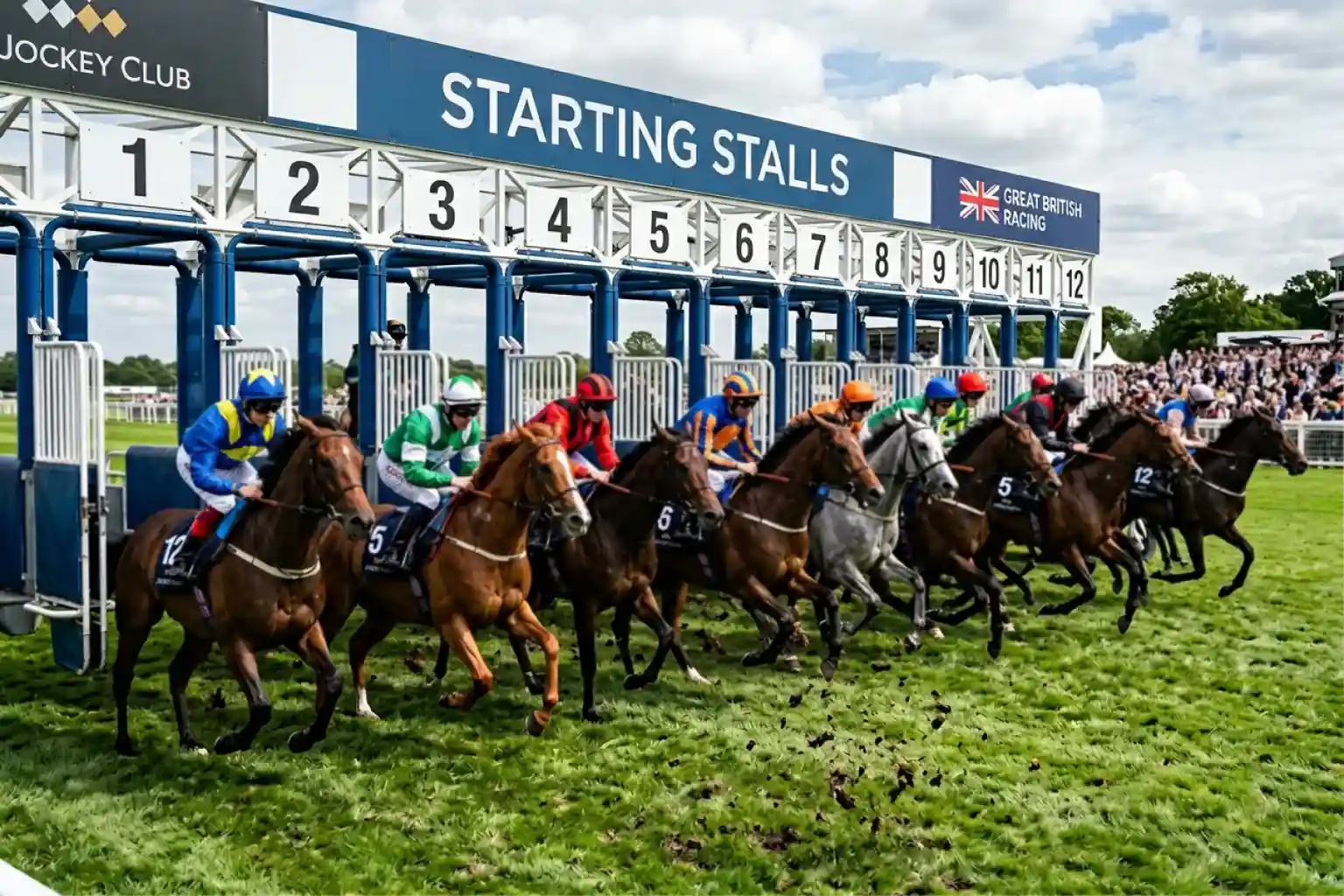
How field size affects hypothetical dividend potential:
| Field size | Possible exacta combinations | Typical dividend range if a non-obvious pair lands |
|---|---|---|
| 6 runners | 30 | GBP 15 – GBP 80 |
| 8 runners | 56 | GBP 25 – GBP 150 |
| 10 runners | 90 | GBP 40 – GBP 250 |
| 12 runners | 132 | GBP 60 – GBP 400 |
| 14 runners | 182 | GBP 80 – GBP 600+ |
Premier Flat meetings tell the most compelling story here. The average field size at these fixtures recently climbed to 11.02 – the strongest figure recorded in recent seasons. These meetings attract the deepest Exacta pools, the widest field diversity, and the most informed public money, making them ideal hunting grounds for a keyed exacta approach where your analytical edge can translate into genuine pool value.
The declining horse population creates a secondary effect. As fields shrink across ordinary midweek cards, low-grade handicaps with five or six declared runners can produce Exacta pools too thin for reliable dividends. I’ve increasingly shifted my forecast betting towards Saturday cards, festival meetings, and World Pool days where bigger fields and deeper pools align.
The Bigger Picture: Where Exacta Betting Sits in UK Racing
Horse racing does not exist in isolation, and neither does the exacta. The health of the sport, the prize money on offer, the number of punters walking through the gates – all of these feed into pool depth, field quality, and ultimately the dividends available to forecast bettors. If you are going to specialise in exacta betting, you need to understand the ecosystem that sustains it.
Remote horse racing betting GGY
GBP 766.7 million for the year to March 2025
Racecourse attendance in 2025
5.031 million – the first time the figure has exceeded 5 million since 2019
Total prize money in 2025
A record GBP 194.7 million across British racing
Levy Board collection 2024/25
GBP 108.9 million – the highest since 2017
Those figures paint a sport that is growing in specific, measurable ways. Racecourse attendance passing the 5-million mark for the first time since before the pandemic is more than a feel-good headline. The British Horseracing Authority described it directly: major meetings and races performed strongly, and attendances are heading upwards at all levels. More people at the track means more on-course pool betting, which means deeper Exacta pools at precisely the meetings where field quality is highest.
Prize money hitting GBP 194.7 million matters for exacta bettors because higher prize funds attract better horses to more competitive fields. The Jockey Club raised its prize money allocation to GBP 61.47 million for 2026, while the Horserace Betting Levy Board committed GBP 77.1 million. Competitive fields with quality runners produce more reliable form lines, which makes exacta analysis more defensible. Races where a GBP 50,000 pot draws eight proven Group-class runners are far more predictable at the top end of the market than a GBP 6,000 seller populated by unreliable maidens.
The remote horse racing betting segment generated GBP 766.7 million in gross gambling yield in the year to March 2025 – the channel through which most Tote Exacta bets are now placed. Its continued growth ensures that online pool liquidity remains robust even outside major festival periods. For a punter placing exacta bets from home, the Tote Guarantee and increasing digital pool depth make remote betting the most structurally advantageous way to access Exacta markets in 2026.
World Pool Exacta: When Global Money Flows Into Your Dividend
The most significant development in UK exacta betting over the past five years has nothing to do with domestic punters. It is the World Pool – a commingling arrangement run through the Hong Kong Jockey Club that merges Tote bets from UK and Irish racecourses with money from ten international jurisdictions. The scale is staggering. Total turnover across all World Pool races reached HK$10.9 billion (approximately GBP 1.2 billion) in 2025, with overseas racing turnover alone growing 20% to HK$9.3 billion.
World Pool commingling – On designated race days, UK Tote bets are pooled with stakes from Hong Kong, Australia, New Zealand, and other participating territories. Instead of a domestic-only pot of perhaps GBP 10,000-50,000 per Exacta pool, bets join a global pool that can reach hundreds of thousands of pounds. The increased liquidity produces smoother, more representative dividends and, crucially, carries a lower deduction rate of 19.5% versus the standard 25%.
That 5.5 percentage-point deduction advantage is the single most overlooked feature in UK pool betting. On a standard Tote Exacta day, a quarter of every pound you stake is removed before dividends are calculated. On a World Pool day, only a fifth goes to deductions. Andrew Harding, Executive Director of Racing at the Hong Kong Jockey Club, described the growth of the World Pool in 2025 as a key driver of racing’s globalisation, citing turnover records broken and increased revenue streams for racecourses and rights holders.
For UK punters, the practical impact is measurable. World Pool has generated GBP 65 million in revenue for UK and Irish racecourses to date – money that feeds back into prize funds, field quality, and the overall health of the racing programme. But the direct benefit to bettors is the dividend itself. Lower deductions mean a larger net pool available for distribution. Combine that with deeper overall liquidity – which reduces dividend volatility – and World Pool days represent the optimum conditions for exacta betting in UK racing.
World Pool fixtures are published in advance, typically covering major UK meetings at Ascot, York, Newbury, and Cheltenham. Checking the Tote website for confirmed World Pool race days is a simple habit that can structurally improve your returns across a season – not through better selection, but through better market conditions on every bet you place.
Mistakes I Made So You Don’t Have To
Every exacta bettor builds a personal archive of errors. Mine started early and ran deep. The first year I focused on forecast betting, I treated every race identically – same box size, same unit stake, no regard for field size or pool conditions. The results were expensive and instructive. Here are the patterns I’ve learned to recognise and avoid.
The most common mistake is over-relying on odds-on favourites. Yes, odds-on shots on the flat win 55-60% of the time. But when a heavily backed favourite wins, everyone who included that horse shares the pool and the dividend collapses. I’ve collected exacta dividends of GBP 7 and GBP 9 on races where the first two in the market filled both places. The favourite can be part of your exacta – but the value comes from pairing it with an unexpected second-place finisher, not from assuming both market leaders will dominate.
Do
- Build exactas around one strong opinion and one contrarian angle
- Adjust your approach based on field size – a six-runner race and a 14-runner race demand different structures
- Allocate a fixed percentage of your betting bank to exotic bets and stick to it
- Record your exacta bets, dividends, and reasoning to identify recurring errors
Don’t
- Box large numbers of horses as a substitute for genuine form analysis
- Assume that a bigger stake on an uncertain combination will compensate for a weak selection
- Ignore the deduction rate – the difference between 25% and 19.5% is real money over a season
- Place exactas in races where your form opinion is identical to the market consensus – you’ll be sharing the pool with everyone else
Another pattern I see constantly: treating the exacta as a lottery ticket. A six-horse box at GBP 1 per unit costs GBP 30, and the dividend for two mid-range runners might only reach GBP 40-60. You’re risking GBP 30 for slim margins. The exacta rewards precision, not coverage – every horse in your selection should earn its place through form analysis, not optimism. Timing also matters: placing your Tote Exacta in the final ten minutes before post lets you see where the money has flowed via the Tote’s live probable dividends. I almost always wait to confirm selections, adjusting based on live pool data rather than committing blind.
Exacta Betting Questions Answered
What is an exacta bet in horse racing?
An exacta is a pool bet requiring you to select the first and second-place finishers in the correct order. In the UK, it runs through the Tote’s pari-mutuel system – all stakes join a shared pool, and dividends depend on the net pool divided among winning unit holders. Also known as a perfecta in North America.
What is the difference between a straight exacta and a boxed exacta?
A straight exacta locks in one horse for first and another for second – reverse them and you lose. A boxed exacta covers both orderings, doubling the combinations and the cost. The straight format pays the full dividend at half the outlay of a two-horse box, making it better value when you have strong conviction about the finishing order.
How much does an exacta box cost?
The formula is n x (n-1) combinations, each multiplied by your unit stake. Two horses produce 2 combinations (GBP 2 at GBP 1 per unit), three produce 6 (GBP 6), four produce 12 (GBP 12), five produce 20 (GBP 20). Costs escalate fast, which is why experienced bettors usually limit boxes to two or three horses.
What is the difference between an exacta and a quinella?
Both bets ask you to identify the first two finishers, but an exacta requires the correct order while a quinella does not. Because the quinella covers two outcomes instead of one, its dividends are typically around half what a straight exacta pays. A boxed exacta provides similar coverage but runs through a different pool and usually delivers a slightly higher return on the Tote.
How are exacta payouts calculated on the Tote?
The Tote collects all stakes for a race’s Exacta pool, deducts 25% (or 19.5% on World Pool days), then divides the remaining net pool by the total number of winning GBP 1 units. The result is the declared dividend per GBP 1 unit. Multiply by your stake to calculate your total return. Dividends are not fixed before the race – they depend entirely on pool size and how the public distributed its money.
What is the difference between a Tote Exacta and a CSF?
The Tote Exacta is a pool bet settled at a pari-mutuel dividend. The Computer Straight Forecast is an algorithmic return calculated post-race from starting prices. Both require the first two finishers in correct order, but they are structurally different products. Data from 3,270 flat turf races showed the Exacta dividend exceeded the CSF in 63% of cases, averaging GBP 102.44 versus GBP 61.50. The Exacta tends to pay more when results are unexpected.
Can I place an exacta bet online in the UK?
Yes. The primary platform is tote.co.uk, where you can place straight, boxed, keyed, and wheeled exactas on any UK race with a qualifying pool. Several major bookmakers also offer access to Tote pools through their own platforms. Online bets qualify for the Tote Guarantee, ensuring your return never falls below the starting price.
Created by the ”Horse Racing Exacta bet” editorial team.