Exacta Betting on All-Weather Racing: Surface, Pools and Year-Round Opportunities
 Available in US
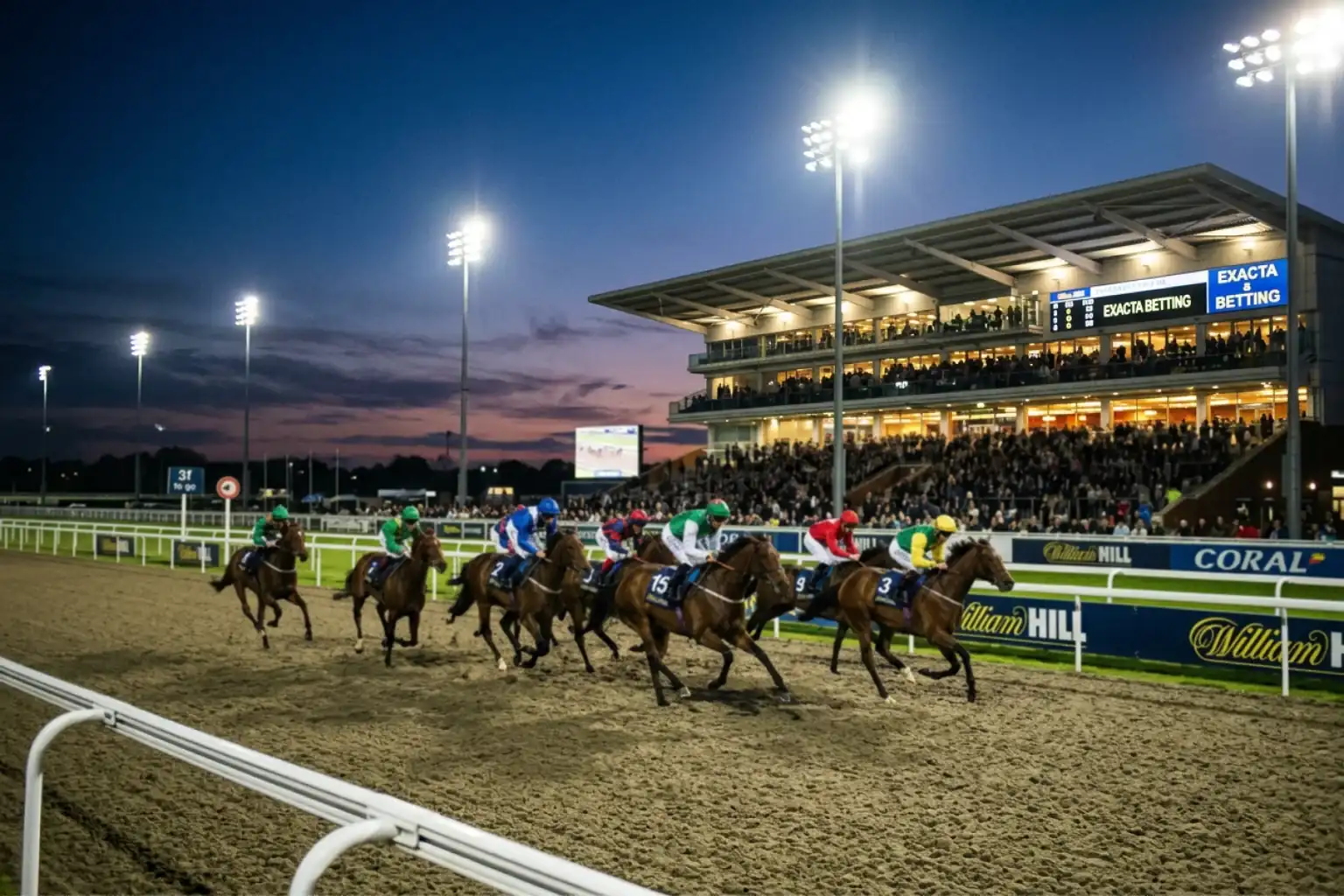
January is dead time for most racing punters. The jumps season is mid-stride but the big festivals are months away, the Flat is hibernating, and the only turf action is soggy National Hunt cards at Catterick and Musselburgh. For exacta bettors, January is actually one of the most productive months of the year – because the all-weather circuit runs six days a week, the pools are smaller, and the casual money that distorts turf dividends is largely absent. Explore horse racing exacta bet for surface-specific tips.
The All-Weather Calendar Advantage
I started taking all-weather exactas seriously in 2018, when a trainer I follow mentioned that his all-weather runners were the most consistent performers in his yard because the surface removes the biggest variable in horse racing: ground conditions. That observation reshaped my approach entirely.
The UK has six all-weather tracks – Chelmsford City, Kempton Park, Lingfield Park, Newcastle, Southwell, and Wolverhampton – and between them they stage racing almost every day of the year. When the turf season shuts down from November through March, the all-weather circuit absorbs the demand, and the Tote pools at these meetings offer exacta opportunities that the summer calendar cannot match.
The key difference is consistency. Turf form is disrupted by ground changes – a horse that loves fast ground can be useless on soft, and the British weather creates form reversals that no amount of analysis can predict. All-weather surfaces maintain near-identical conditions year-round. Polytrack at Lingfield and Chelmsford races the same in February as it does in August. Tapeta at Newcastle and Wolverhampton is similarly stable. This consistency means form is more reliable, which sounds like it should compress exacta dividends – but it does not, because the betting public does not adjust its behaviour to match.
Pool Dynamics on All-Weather Cards
Here is the counterintuitive reality of all-weather Tote pools: they are smaller than turf pools, which should mean less stable dividends, but the composition of the money is more predictable. Britbet’s on-course pool turnover across all UK tracks reached 73.6 million in 2024, but the all-weather share is modest because on-course attendance at midweek all-weather meetings is a fraction of a Saturday turf card. The pools are built primarily from online bets, and online bettors tend to be more form-focused than the casual on-course crowd.
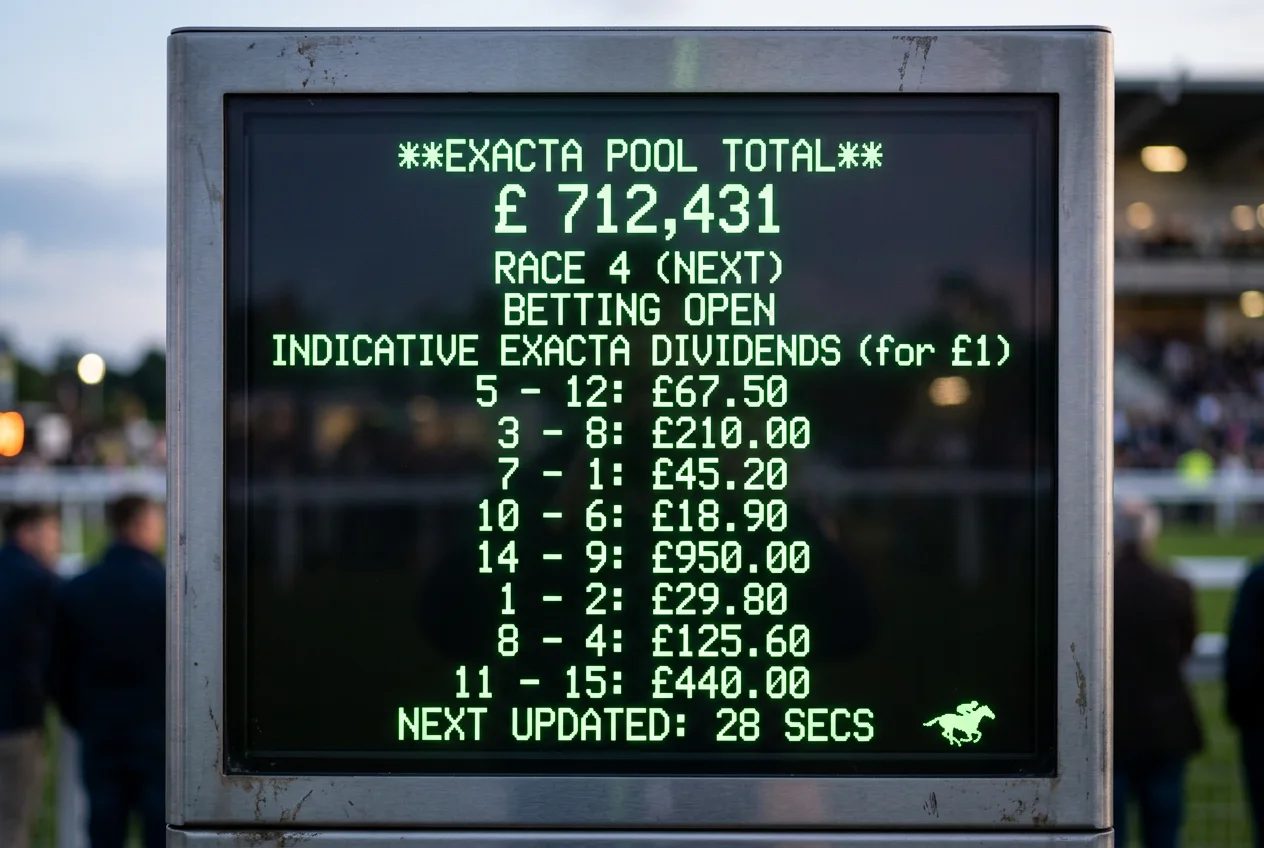
Smaller pools mean that a single large bet can shift the indicative dividends noticeably. I have seen the indicative exacta dividend for a specific combination drop by 30% in the final two minutes at an evening meeting at Wolverhampton, clearly because one bettor placed a significant stake on that pairing. At a Premier Flat meeting, the same bet would barely register in the pool. For exacta bettors, this volatility cuts both ways – it can suppress your dividend if others back the same combination, or inflate it if you are the only one on a winning pairing.
The online betting market’s gross gaming yield grew 13.1% to 7.8 billion in the year to March 2025, accounting for 46% of the total regulated market. All-weather racing captures a significant slice of that online activity because it fills the evening and midweek schedule that television and streaming platforms need to keep punters engaged. More online money in the pool typically means more informed money, which in turn means the favourites are more accurately priced – but the exacta combinations involving non-favourites remain undervalued because even informed bettors focus their forecast money on a narrow range of expected outcomes.
Surface-Specific Form and Exacta Selection
Not all all-weather surfaces produce the same racing. Polytrack, Tapeta, and Fibresand each have distinct characteristics that influence which running styles and horse types prevail, and those differences feed directly into exacta selection.
Lingfield’s Polytrack suits front-runners, particularly over sprint distances. The surface has a slight bias toward pace, and horses that can get a clear lead around the tight bends have a tactical advantage that the form figures often understate. My exacta selections at Lingfield lean heavily toward confirmed front-runners in the first position, with closers as second-place candidates if the pace collapses.
Newcastle’s Tapeta is a flatter, more galloping surface where stamina carries more weight. The long straight at Newcastle allows closers to make up ground gradually, and the draw is less influential than at tighter tracks. Exacta bets at Newcastle reward punters who identify horses with strong finishing speed, even if their early pace figures are unremarkable.
Southwell’s Fibresand is the outlier – a deep, holding surface that exaggerates the advantage of horses who have proven form on it. Fibresand specialists often run well below their turf ratings but outperform on the unique surface. The exacta value at Southwell comes from identifying these surface specialists and fading horses with strong turf form but no Fibresand experience. The betting public consistently undervalues handicap runners with specific surface credentials, and Southwell amplifies that tendency because Fibresand form is so different from anything else in the UK calendar.
Evening Meetings and the Time-of-Day Effect
Most all-weather meetings run in the evening, starting at 4pm or later. This timing has a measurable effect on pool composition and exacta dividends that I did not appreciate until I separated my records by time of day.
Evening meetings attract a different betting demographic than afternoon racing. The after-work crowd bets more casually, often placing single forecast bets on the two horses at the top of the market without studying the form in depth. This concentrates the pool on obvious combinations and inflates dividends for non-obvious results. My records show that average exacta dividends on evening all-weather cards run approximately 15-20% higher than on afternoon all-weather cards with similar field sizes, and the difference is almost entirely driven by the pool composition rather than the quality of the racing.
The practical takeaway is straightforward: if you are going to bet all-weather exactas, prioritise the evening cards. The form is equally analysable, the pools are adequate for small-to-medium stakes, and the casual money in the pool creates a systematic dividend premium that compounds over hundreds of bets. A season of disciplined evening all-weather exactas, bet at small unit stakes with part-wheel structures, is one of the steadiest ways to build pool betting returns outside the festival calendar. Apply small field exacta strategies on quieter all-weather cards.
Do all-weather Tote Exacta pools pay less than turf pools?
Not necessarily. While all-weather pools are typically smaller in total, the dividends per unit can be higher because the pool composition favours casual combinations. Smaller pools also mean less dilution of winning units when unconsidered combinations land. The key variable is not pool size but pool distribution – how the money is spread across combinations.
Which UK all-weather tracks are best for exacta betting?
Each track has different characteristics. Lingfield and Chelmsford (Polytrack) favour pace and front-runners. Newcastle (Tapeta) suits galloping types with stamina. Southwell (Fibresand) rewards surface specialists. For exacta dividends specifically, Southwell tends to produce the most unpredictable results because Fibresand form is distinct, leading to higher average dividends on combinations the betting public undervalues.
Created by the ”Horse Racing Exacta bet” editorial team.