Exacta Bet Horse Racing: How It Works and How to Win More Often
 Available in US
Table of Contents
- What an Exacta Actually Is and Why It Exists
- Placing Your First Exacta on a UK Racecourse or Online
- How the Pool Works and Where Your Money Goes
- Picking the Right Races for Exacta Betting
- Five Mistakes That Drain Exacta Bankrolls
- Tote Exacta or Bookmaker Forecast: Which Pays Better
- Frequently Asked Questions
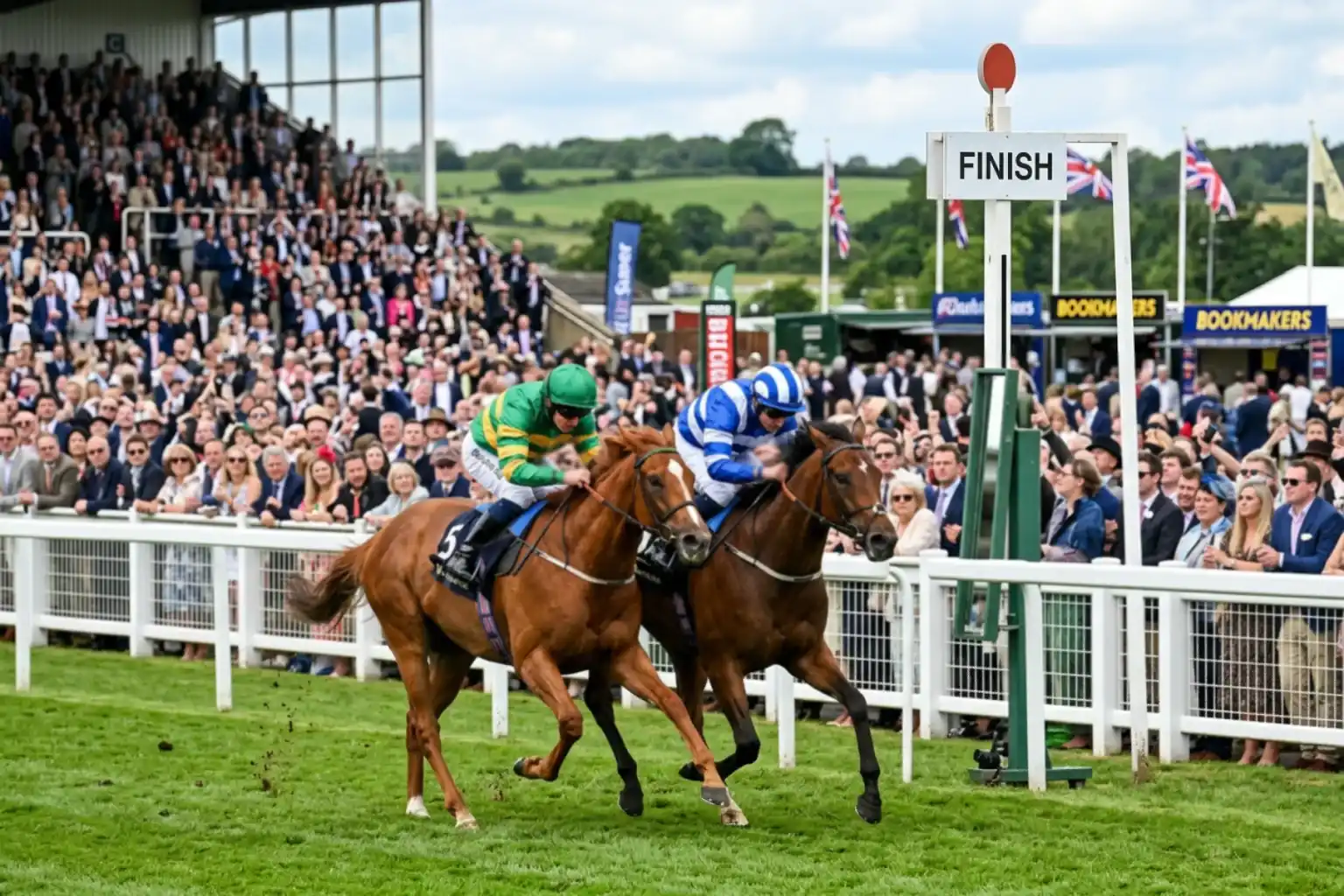
I placed my first exacta on a drizzly Wednesday at Kempton in 2009. I had no idea what I was doing. I picked the two horses I liked most, ticked a box on the Tote slip, and forgot about it until the race ended with my first selection winning and my second finishing runner-up. The payout was 47 pounds on a one-pound stake. I was hooked – not because the money was life-changing, but because the intellectual challenge of predicting first and second in order felt like a completely different sport from backing a single horse to win. See also: horse racing exacta bet for the complete exacta guide.
The exacta is the simplest exotic bet in horse racing. You pick the first two finishers in the correct order. Get it right, and the Tote pool rewards you with a dividend that can dwarf what any win or each-way bet would have returned. Get it wrong – and you will get it wrong far more often than you get it right – and you lose your stake. That combination of difficulty and reward is what makes exacta betting compelling for anyone who is willing to think a little harder about a race than “which horse will win.”
This guide is for anyone who has watched enough racing to have opinions about finishing positions but has not yet translated those opinions into exacta bets. I will walk you through what the bet actually is, how to place it, where your money goes inside the pool, which races deserve your attention, the mistakes that cost beginners the most, and whether the Tote pool or a bookmaker forecast gives you better value. Every claim is backed by real data from UK racing, because hunches are cheap but numbers are not.
What an Exacta Actually Is and Why It Exists
Every betting market is built on a question. A win bet asks: which horse finishes first? An each-way bet asks: which horse finishes in the top two, three, or four? An exacta asks something harder: which two horses finish first and second, and in what order?
That “in what order” clause is what separates the exacta from everything else. If you pick Horse A to finish first and Horse B to finish second, you only win if that exact sequence materialises. Horse B first and Horse A second is a losing bet – unless you have boxed your selection, which covers both orders but costs twice the unit stake. The terminology comes from North American racing; in the UK, the same bet was called a “forecast” for decades before the Tote rebranded it as the Exacta in 2018 to align with international pool betting conventions.
The reason the exacta exists is mathematical. In a 10-runner race, there are 90 possible first-and-second combinations. That creates a market far more complex than a win market’s 10 outcomes, which means the pool’s money is distributed across far more possibilities. When a result surprises the betting public – when an outsider fills first or second – fewer winning tickets share the pool, and the dividend spikes. Across a sample of 3,270 UK turf flat races, the average Tote Exacta dividend came in at 102 pounds 44 pence to a one-pound unit stake. The equivalent Computer Straight Forecast on the same races averaged 61 pounds 50 pence. That 67% premium is not random noise; it is a structural feature of how pool money concentrates around predictable outcomes and disperses away from surprising ones.
The exacta is classed as an exotic bet – a category that also includes the Trifecta, Placepot, and Quadpot. Exotic bets account for roughly 8 to 12% of total UK racing turnover, a smaller slice than win and each-way betting but a growing one. The appeal is simple: they offer payouts that no win bet can match, even at long odds, because you are predicting a more specific outcome.
Placing Your First Exacta on a UK Racecourse or Online
The first time I tried to place an exacta on-course, I stood at the Tote window for an embarrassingly long time while the queue built up behind me. The process is simple once you have done it once, but nobody tells you that beforehand.
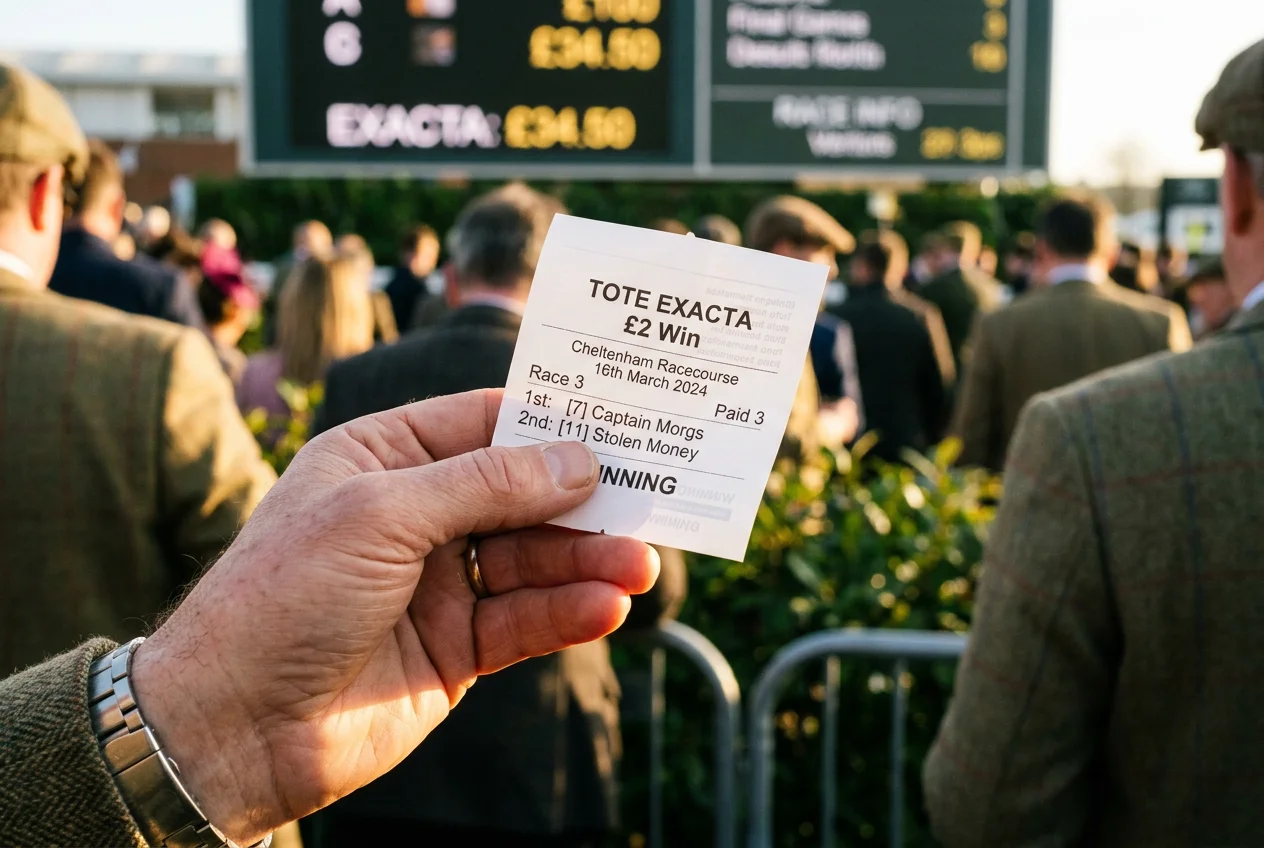
On-course, you approach a Tote window or use a self-service terminal. You tell the operator (or select on screen) the race number, choose “Exacta” as the bet type, and then select your first-place horse and your second-place horse. You specify your unit stake – the minimum is typically one pound for a straight exacta and can be as low as 10 pence per combination if you are boxing. The operator prints a slip, you pay, and you are done. If your combination wins, you return to any Tote window to collect. The dividend is displayed on screens around the course within minutes of the result being confirmed.
Online, the process mirrors the on-course experience but with clearer visual cues. You navigate to the Tote section, select the race, and you will see a grid of runners. For a straight exacta, you tap your first-place selection and your second-place selection in the marked columns. For a boxed exacta, you select two or more horses in the “box” column and the system calculates the total cost – which is the number of permutations multiplied by your unit stake. The Tote’s digital interface shows the current pool size and the approximate number of combinations entered, giving you a rough sense of likely dividend range before you commit.
One thing that catches newcomers off guard is the timing. Exacta pools close when the race starts, but the pool size continues to shift right up until that moment. Late money – especially on televised races where armchair bettors pile in during the final minutes – can dramatically alter the composition of the pool and therefore the dividend. I have learned to place exactas earlier rather than later on races where I have a strong view, rather than waiting until the last second and competing with the late-money crowd that tends to follow the obvious combinations.
How the Pool Works and Where Your Money Goes
Here is the part most guides skip, and it is the part that matters most. When you place a one-pound exacta, that pound does not sit in a vault waiting for you to win. It enters a pool – a shared pot of money from every bettor who has placed an exacta on that race. The Tote takes a slice of that pool as its operating margin, and the rest goes to the winners.
On standard UK Tote racing, the deduction is 25%. Place a thousand pounds into the pool across all bettors, and 250 pounds goes to the Tote. The remaining 750 pounds is split among everyone who backed the correct first-and-second combination, proportional to their stake. On World Pool races – where the UK Tote integrates its pools with the Hong Kong Jockey Club and other international operators – the deduction drops to 19.5%. That 5.5-percentage-point difference might sound small, but it means 5.5% more money stays in the pool for distribution. Over a full season of betting, that lower deduction translates to meaningfully higher average returns.
The Tote’s overall average margin on pool betting sits at approximately 6.3%, which is lower than the deduction rate because the Tote returns money to racing through mechanisms that reduce the effective take. Britbet – the on-course pool aggregator – generated 73.6 million pounds in on-course pool turnover in 2024, a 26% increase since 2018, and returned more than 25 million pounds to racecourses. That reinvestment is part of the reason pool betting still thrives at UK tracks: racecourses have a financial incentive to promote the Tote, which in turn sustains the pool depths that make exacta betting viable.
The dividend formula itself is straightforward: net pool (total pool minus deduction) divided by the number of winning units. If 20,000 pounds enters the Exacta pool, the Tote removes 5,000 (at 25%), and 100 one-pound units back the winning combination, the dividend is 150 pounds to a one-pound unit. If only 20 units back the winner, the dividend rises to 750 pounds. The entire payout dynamic hinges on how many people backed the same combination as you. This is why exacta betting rewards contrarian thinking – the fewer people who share your winning opinion, the more you earn. For a deeper look at the calculation process, I have written a full breakdown of how exacta payouts work with real UK examples.
Picking the Right Races for Exacta Betting
Not every race deserves an exacta bet. This was the hardest lesson for me to learn, and it took three unprofitable seasons before I accepted it. The difference between a winning exacta bettor and a losing one is not the ability to pick horses – it is the discipline to wait for races where the structure favours the bet.
Field size is the first filter. In a 5-runner race, there are only 20 possible exacta combinations. The public can cover most of them cheaply, and the winning combination is more likely to attract heavy support, which compresses the dividend. In a 12-runner race, there are 132 combinations. The pool cannot cover them all adequately, and the winning combination is far more likely to be underlaid – backed by fewer units than its true probability would suggest. UK flat racing averages 8.90 runners across all fixtures, but Premier meetings average 11.02. I do most of my exacta betting at those Premier fixtures specifically because the larger fields generate the combination count needed for outsized dividends.
Race class is the second filter. Competitive handicaps are the natural home of exacta betting. In a Class 2 handicap, the top weight and the bottom weight are separated by perhaps a stone and a half on official ratings, but the actual performance gap is often smaller because handicaps are designed to equalise the field. The result: any of six or eight runners could realistically finish in the first two, and the betting public spreads its money across many combinations. Compare this to a Group 1 where three or four horses dominate the market. The likely finishing order is more predictable, the pool concentrates on fewer combinations, and the winning dividend rarely justifies the risk of an exacta over a simple win bet.
Racecourse attendance exceeded 5.031 million in 2025, and the busiest days produce the deepest Tote pools. Festival meetings – Royal Ascot, the Cheltenham Festival, the Ebor meeting at York – combine large fields, massive pools, and high-quality competitive racing. These are the days where exacta dividends most consistently reward skilled selection. The Levy Board collected 108.9 million pounds in 2024/25, the highest figure since 2017, and that revenue ultimately flows back into the prize money that attracts the deep competitive fields where exacta betting thrives.
I keep a simple rule: no exacta on any race with fewer than eight runners unless I have a very specific view on an unconventional runner-up. For races with eight to ten runners, I lean toward straight exactas or targeted keys. For races with 12 or more runners, I consider boxed combinations or wheels, accepting the higher cost in exchange for the vastly greater dividend potential.
Five Mistakes That Drain Exacta Bankrolls
I have made every one of these mistakes personally, so consider this list a confession as much as a warning.
The first mistake is boxing everything. A boxed exacta on four horses creates 12 combinations at 12 times your unit stake. If the dividend comes back at 15 pounds, you have spent 12 pounds to collect 15 – a profit of 3 pounds on what felt like a bold, creative bet. Boxing is a useful tool, but it must be justified by genuine uncertainty about the finishing order. If you have a strong opinion about the winner, a keyed exacta – fixing that horse in first and combining it with multiple second-place options – costs a fraction of the box while capturing the same value if your banker wins.
The second mistake is chasing small-field races because they feel “easier.” Yes, a 5-runner race is easier to predict than a 14-runner handicap. But the dividend reflects that ease. You are spending exacta stakes for win-bet returns, which is the worst possible value proposition in pool betting. Save your exacta budget for the races where the complexity creates genuine dividend opportunities.
Third: ignoring the runner-up market entirely. Most bettors pick their exacta by choosing a likely winner and then half-heartedly adding a second horse. But the second-place selection is where the dividend lives. If everyone agrees on the winner and everyone also agrees on the runner-up, the dividend will be modest even if the result is “correct.” The value is in identifying a second-place finisher that the public has overlooked – a horse that has strong place form but is not on anyone’s radar for the exacta.
Fourth: betting the same unit stake regardless of race conditions. A one-pound unit stake on a 5-runner conditions race and a one-pound unit stake on a 16-runner handicap are not equivalent bets in terms of expected value. The handicap offers far greater dividend potential per unit risked. I allocate smaller unit stakes to races where I need multiple combinations (boxes, wheels) and larger unit stakes to races where I have a precise, high-conviction straight exacta.
The fifth mistake is emotional re-investment – chasing losses by placing an exacta on the next race because the last one nearly hit. Exacta betting is inherently streaky. You will go through runs of ten or fifteen losses between winners. That is normal. What is not normal is increasing your stakes to compensate, because the variance in exacta returns is far wider than in win betting. A disciplined staking plan, fixed at a percentage of your bankroll, keeps you in the game long enough to land the dividends that make the wait worthwhile.
Tote Exacta or Bookmaker Forecast: Which Pays Better
This is the question that every exacta bettor eventually asks, and the data gives a clear answer.
The Tote Exacta beats the Computer Straight Forecast – the bookmaker equivalent – in 83% of races across all UK racing. On World Pool days, where international liquidity deepens the pool, the Exacta still outperforms the bookmaker forecast 73% of the time, paying on average 30% more. The CSF averaged 61 pounds 50 pence across 3,270 turf flat races where the Tote Exacta averaged 102 pounds 44 pence. The numbers support this trend: Britbet grew on-course pool turnover to 73.6 million pounds by 2024 precisely because punters are finding better value in pool products – and the numbers support that claim.
Why does the pool product consistently outpay the fixed-odds equivalent? The answer lies in how each product prices risk. A bookmaker sets the CSF price using a formula based on the starting prices of the first two finishers. That formula builds in a margin that protects the bookmaker’s profit. The Tote pool, by contrast, distributes money among winners according to actual betting patterns. When the result surprises the market – which it frequently does in exacta-relevant races – the pool concentrates its payout on a smaller number of winning tickets, producing dividends that no bookmaker formula can match.
There are scenarios where the CSF pays more. In very small fields with short-priced favourites, the Tote deduction (25% standard, 19.5% World Pool) can eat into dividends enough that the bookmaker formula produces a marginally higher return. But these are precisely the races where exacta betting offers the least value anyway. If you are selecting races correctly – targeting larger fields and competitive handicaps – the pool product will outperform the bookmaker forecast in the overwhelming majority of cases.
World Pool integration has amplified this advantage. The programme generated 65 million pounds in revenue for UK and Irish racecourses by 2025, with total World Pool turnover reaching approximately 1.2 billion euros. That scale of liquidity creates pools so deep that dividend distortions from individual large bets become negligible. On a World Pool day, your exacta dividend is being set by the collective opinion of bettors across Hong Kong, the UK, France, Japan, and a dozen other jurisdictions. The result is a pricing mechanism that is more efficient, more liquid, and consistently more generous to winning exacta bettors than anything a single bookmaker’s formula can replicate. New to exactas? Start with our exacta betting for beginners walkthrough.
Frequently Asked Questions
What is the minimum stake for a Tote Exacta?
The minimum unit stake varies by platform. On-course Tote windows typically accept a minimum of one pound for a straight exacta. Online, unit stakes can go as low as 10 pence per combination, which means a two-horse box costs 20 pence total. Check the specific platform’s rules before placing your bet, as minimum stakes can change.
Can I place an exacta bet online or only at the racecourse?
You can place exacta bets both on-course at Tote windows and self-service terminals, and online through the Tote’s digital platform. The bet types and dividend structures are identical regardless of where you place the bet. Online platforms also display current pool sizes and combination counts to help you gauge likely dividends.
What happens if my exacta selection is a non-runner?
If one of your selections is declared a non-runner before the race, your exacta bet is void and your stake is refunded. If you have placed a boxed or keyed exacta, only the combinations involving the non-runner are void – the remaining valid combinations still stand. Always check the non-runner announcements before the race to understand how your bet is affected.
How many runners should a race have for exacta betting to be worthwhile?
Races with eight or more runners offer the best exacta value. Larger fields create more possible finishing combinations, which spreads the pool money thinner and produces higher dividends when unexpected results occur. Premier flat meetings average 11.02 runners per race, making them particularly attractive for exacta bettors compared to smaller cards.
Created by the ”Horse Racing Exacta bet” editorial team.