Banker Exacta Explained: How to Key a Single Horse for Profit
 Available in US
Table of Contents
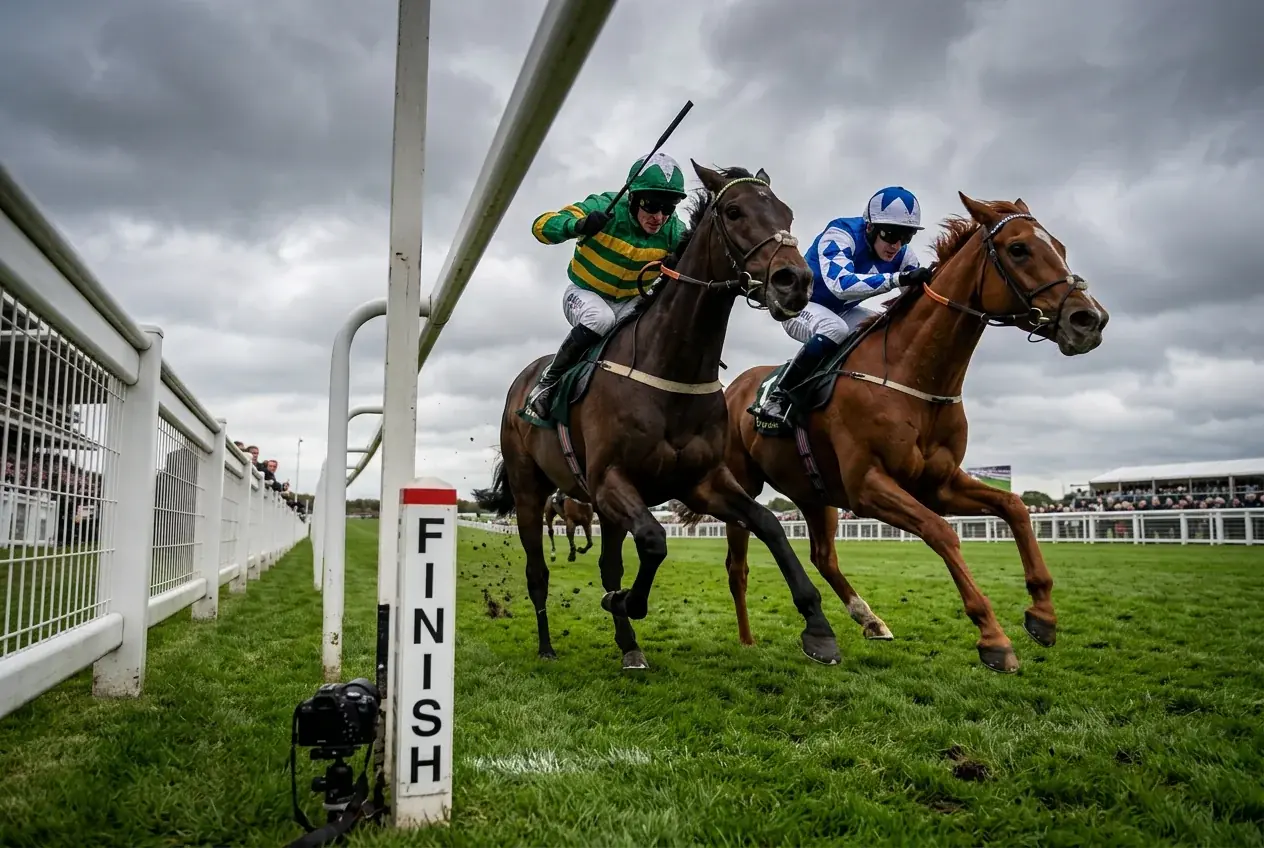
The best exacta bet I placed last season was a banker. I keyed a horse I was certain would win a conditions race at Newmarket – strong form, ideal ground, jockey booking that screamed confidence – and paired it with four runners for second place. The winner came in at 5/4. The second horse was a 14/1 shot I included almost as an afterthought. The exacta dividend was £67.40 to a £1 stake. A straight win bet on the favourite would have returned £2.25. That is the banker exacta in action: leveraging conviction in one horse to unlock pool value through the uncertainty of the runner-up. Explore horse racing exacta bet for keying strategies.
A banker exacta – also called a keyed exacta – fixes one horse in a specific finishing position (usually first) and pairs it with several other runners for the remaining position. Instead of boxing all your selections and paying for every permutation, you concentrate your stake on the outcomes you consider most likely. It is one of the most efficient structures available in UK pool betting, and this guide breaks down exactly how it works, what it costs, and when it pays off.
Banker Mechanics
Every seasoned pool bettor I know reaches for the banker structure before anything else when they have one horse they trust more than the rest of the field. The logic is clean and the cost savings are significant.
When you key a horse in first place and pair it with, say, five runners for second, you have five combinations. If you boxed all six horses instead, you would have thirty combinations – six times the cost for the same unit stake. The banker cuts your outlay dramatically by eliminating every permutation where your key horse does not win.
The trade-off is obvious: if your banker does not finish first, you lose the entire stake. There is no consolation prize for the keyed horse finishing second. This makes the banker a high-conviction bet – you need to be confident not just that the horse will be competitive, but that it will actually win. Odds-on favourites on the Flat in the UK win between 55% and 60% of the time, which means they lose 40-45% of the time. Even strong market leaders fail often enough that a banker exacta carries real risk.
The structure works in both directions. You can key a horse in second place and include multiple runners for first. This is less common but useful when you have strong views about a horse that will run into the places without necessarily winning – a consistent runner-up type. The combinations and cost are identical: one fixed position, multiple candidates for the other. I use the “keyed in second” structure occasionally for handicaps where I expect the favourite to finish close but not necessarily on top, pairing it with several speculative winners at bigger prices.
A banker exacta can also be extended to cover both directions. Key horse A in first with runners B, C, D for second – three combinations. Then key horse A in second with B, C, D for first – three more combinations, six total. This is effectively a partial box with A guaranteed to appear in every combination but without paying for the B-C, B-D, C-D permutations. It costs less than a four-horse box (twelve combinations) but more than a one-directional key (three combinations).
Cost Calculation
The arithmetic for banker exactas is the simplest of any multi-combination forecast bet. If you key one horse in first and pair with N runners for second, the total cost equals N multiplied by your unit stake. If you key in both directions, the cost is 2 x N x unit stake.
Here is how it scales at a £1 unit stake, keyed in first only: two runners for second costs £2, three runners costs £3, four runners costs £4, five runners costs £5. At 10p per combination online through the Tote, the same structures cost 20p, 30p, 40p, and 50p respectively. Compare that with a full box: three horses boxed costs £6 at £1 units, four horses boxed costs £12, five horses boxed costs £20. The banker saves 50% or more on every combination count.
The dividend you receive on a winning banker exacta is the same as a winning straight exacta with the identical combination. The pool does not distinguish between how you arrived at the combination – whether it was a straight bet, part of a box, or part of a keyed structure. The dividend is declared per £1 winning unit on the specific first-second combination. Your method of coverage affects only your cost, not your return.
One practical consideration: if you are keying in both directions (the horse in first and second) with three other runners, your six combinations have different expected dividends. The combinations where your banker wins will typically pay less than the combinations where it finishes second, because the keyed horse is likely to be shorter-priced and popular in the pool. This asymmetry is worth understanding when you decide whether to cover both directions or commit to one.
When to Use a Banker
I have a mental checklist before committing to a banker exacta, and it starts with a question that has nothing to do with the horse: how strong is my conviction relative to the market?
If I rate a horse as a near-certain winner but the market has it at odds-on, the pool value in combinations involving that horse as the winner will be compressed. Everyone else is backing the same thing. The banker still works, but the exacta dividend for the obvious combination (favourite first, second favourite second) will be modest. In that case, I pair the banker with longer-priced runners for second – the dividend premium comes from the runner-up position, not the winner.
The ideal banker scenario is a horse I rate higher than the market does. If I am convinced a 3/1 shot should be closer to even money, the exacta pool will have less money on combinations involving that horse than my assessment warrants. The dividend uplift comes from both positions – the underbet winner multiplied by whatever finishes second.
Favourites win roughly 30-35% of UK races on average. That is not high enough to justify blanket banker bets on market leaders. But within specific race types – conditions stakes, novice events, Group races with small fields – the favourite’s win rate climbs significantly. These are the races where banking the favourite and spreading runners for second produces the best risk-reward profile.
I avoid banker exactas entirely in large-field handicaps. The uncertainty is too high, the favourite’s win rate drops below 20% in many competitive handicaps, and the cost saving from keying versus boxing is offset by the elevated risk of losing the entire stake. In those races, a boxed or wheeled approach covers more ground. For a broader look at tactical options, the exacta strategy guide covers wheeling, field-size filters, and staking approaches alongside the banker method.
Worked Example
Let me walk through a real-type scenario using numbers that reflect typical UK racing conditions.
Race: a Class 2 conditions stakes at York, eight runners. You have identified a horse – call it Runner A – that you strongly fancy to win based on form, ground conditions, and a jockey booking upgrade. Runner A is 7/2 in the betting market but you rate it much shorter. For second, you think the race for the runner-up spot is open between three horses: Runner B (5/2 favourite), Runner C (9/2), and Runner D (10/1).
Your banker exacta: Runner A keyed in first, paired with B, C, and D for second. That is three combinations at £2 per combination, totalling £6.
If the result is A first, B second, the exacta dividend might be £28 to a £1 stake (moderate, because B is the favourite and attracts pool money in second). Your return on £2 per combination: £56 for a £6 total outlay. Profit: £50.
If the result is A first, D second, the dividend could be £145 to a £1 stake (D is a longer price and fewer people included it in their exacta combinations). Your return: £290 for the same £6 outlay. Profit: £284.
If A does not win – finishing second, third, or worse – you lose the £6 regardless of what finishes in the first two positions. The banker is binary: your key horse wins and you collect, or it does not and you are done.
That binary risk is exactly why the banker structure demands genuine conviction. It is not a bet for races where you “quite like” a horse – it is a bet for races where you have a strong, reasoned view that one horse is the most likely winner and the market has not fully priced that view in. When those conditions align, the banker exacta is the sharpest tool in the forecast betting kit. Build a broader system with our exacta betting strategy guide.
Can I key a horse in second place instead of first?
Yes. You can fix your banker in the second position and pair it with multiple runners for first place. This structure is useful when you are confident a horse will finish in the top two but less certain it will win. The cost and number of combinations are identical to keying in first – one combination per included runner for the open position.
How many runners should I include alongside my banker?
Three to five runners for the open position covers the most likely outcomes without inflating costs. Two runners creates a very narrow bet with limited flexibility. More than five starts to approach the cost of a partial box and dilutes the cost advantage of the banker structure. Match the number of included runners to the competitiveness of the field for the runner-up position.
Written by the editors at Horse Racing Exacta bet.