Exacta Dividend Calculator: How to Estimate Your Tote Payout Before the Off
 Available in US

Before I place any exacta bet, I estimate the dividend. Not because I need a precise number – the final figure depends on the pool, which I cannot control – but because the estimate tells me whether the bet is worth placing at all. If my estimate suggests a dividend of 15 and I believe the combination has a 4% chance, the expected value is 0.60 per 1 unit staked. That is a losing proposition, and no amount of optimism about the horses changes the arithmetic. Estimating dividends is not optional for serious exacta bettors – it is the foundation of every staking decision. See also: horse racing exacta bet for payout estimation tools.
The Quick Market Price Method
The simplest way to estimate an exacta dividend is to multiply the approximate win odds of your two selections, then apply an adjustment. This is crude but effective for rapid assessment.
Take Horse A at 6/1 to win and Horse B at 10/1. If they were independent events, the combined probability would be their individual probabilities multiplied together: (1/7) x (1/11) = 1/77, suggesting a fair payout of 77. But horse racing is not a series of independent events – if Horse A wins, Horse B’s chance of finishing second changes because the competitive dynamics of the race have shifted. The conditional probability of B finishing second given A wins is higher than B’s raw win probability in most cases, because A’s victory removes other contenders from the picture.
My rule of thumb is to take the product of the two win odds and multiply by 0.6-0.8. The lower end of that range applies when the two horses are from similar parts of the market (both mid-range prices), and the higher end applies when one horse is a clear outsider. For the 6/1 and 10/1 example, the product is 77, and a 0.7 multiplier gives an estimate of about 54. This accounts for the conditional probability adjustment and the Tote’s 25% pool deduction, which is already built into the declared dividend.
This method breaks down when either horse is very short (under 3/1) or very long (over 25/1). Short-priced horses attract disproportionate pool money, compressing the exacta dividend below what the formula suggests. Long-priced horses attract almost no pool money, inflating the dividend well beyond the formula’s output. For combinations at the extremes of the market, the indicative dividend from the Tote platform is a better guide than any formula.
Using Indicative Dividends as Your Calculator
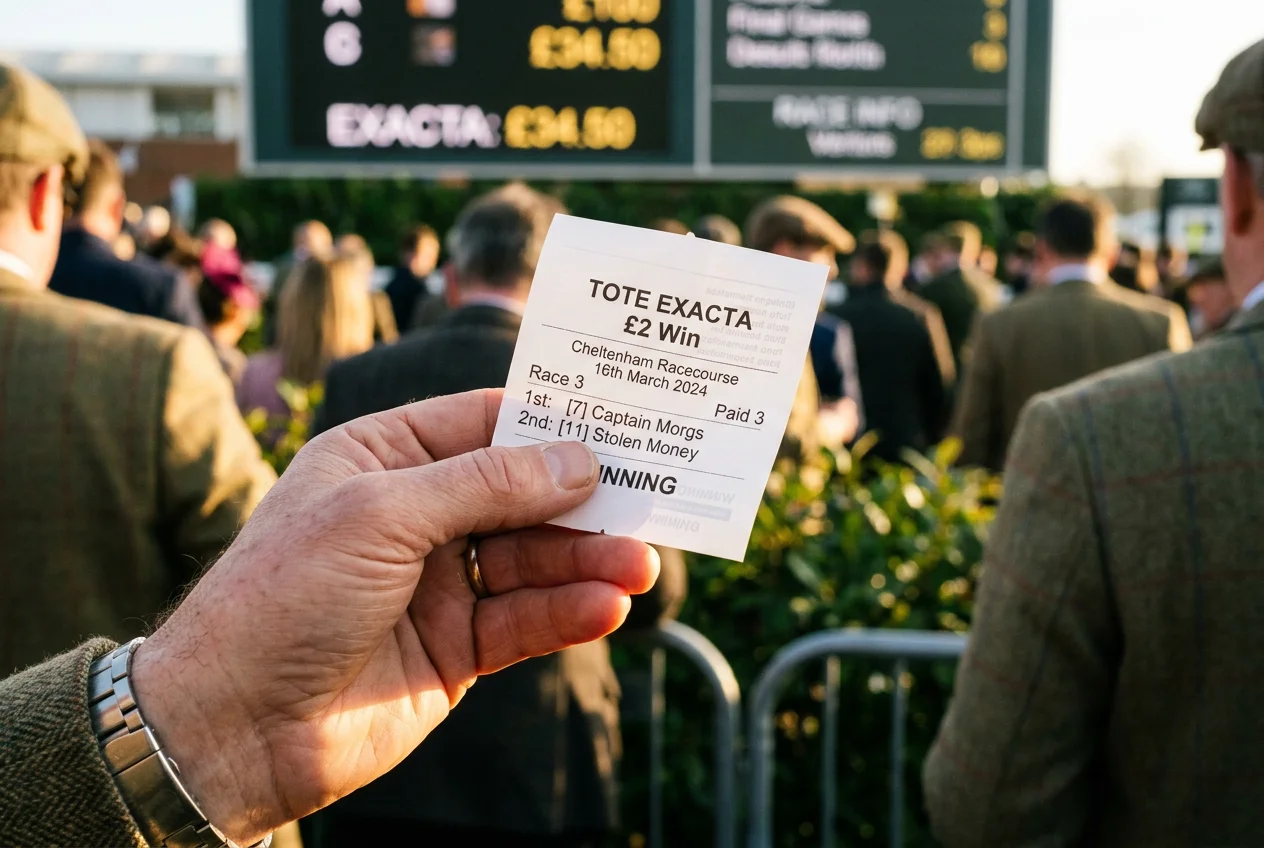
The Tote platform displays indicative dividends for popular combinations in the lead-up to each race. These are the most accurate pre-race estimates available, because they reflect the actual pool distribution rather than a mathematical approximation.
However, indicative dividends are published only for selected combinations, typically the most commonly backed pairings. If your exacta involves two unconsidered horses, the indicative dividend for that combination may not appear on the platform. In that case, you can reverse-engineer an estimate from the available data.
Here is how: if the combination of the favourite (Horse F) and the second favourite (Horse S) is showing an indicative dividend of 8, and the total pool is 20,000, then the net pool after the 25% deduction is 15,000. An indicative of 8 means approximately 1,875 in units backs the F-S combination (15,000 / 8 = 1,875). If the total pool is 20,000 gross and the F-S combination holds 1,875 in units, that is about 9.4% of the gross pool. For your unconsidered combination – which might hold 0.2% of the pool or less – the indicative dividend would be correspondingly larger. If 40 in units backs your combination (0.2% of 20,000), the estimated dividend is 15,000 / 40 = 375.
This calculation requires knowing the total pool size, which the Tote sometimes displays and sometimes does not. When it is available, the reverse-engineering approach gives a far more accurate estimate than any odds-based formula. When it is not, the quick market price method is your fallback.
The Break-Even Dividend
Rather than estimating what the dividend will be, sometimes the more useful question is: what does the dividend need to be for this bet to make sense? This is the break-even calculation, and it reframes the entire decision.
If you believe your combination has a 5% chance of winning, the break-even dividend is 20 per 1 unit. Anything above 20 is positive expected value; anything below is negative. The beauty of this approach is that it separates the selection decision from the staking decision. Your form analysis determines the probability estimate. The pool determines the dividend. Your only decision is whether the dividend exceeds the break-even threshold.
Favourites win 30-35% of UK races overall, which means the favourite-to-finish-first component of an exacta starts with a base probability in that range. The second horse’s probability of finishing second, given the first horse wins, is conditional and typically ranges from 15-25% for the second favourite down to 3-5% for outsiders. Multiply the two probabilities to get the combination probability, then calculate the break-even dividend.
For a combination with a 2% probability (a realistic figure for many exacta bets involving at least one outsider), the break-even dividend is 50. The average Tote Exacta dividend across 3,270 turf flat races is 102.44, which sits comfortably above that break-even for a 2% probability combination. But averages are misleading – the median dividend is much lower, and most winning exactas pay between 10 and 60. The break-even calculation protects you from placing bets where the likely dividend falls below your probability-derived threshold, even when the average suggests the pool is generous.
Building a Pre-Race Estimation Routine
I run through the same mental checklist before every exacta bet, and the whole process takes less than two minutes once it becomes habit.
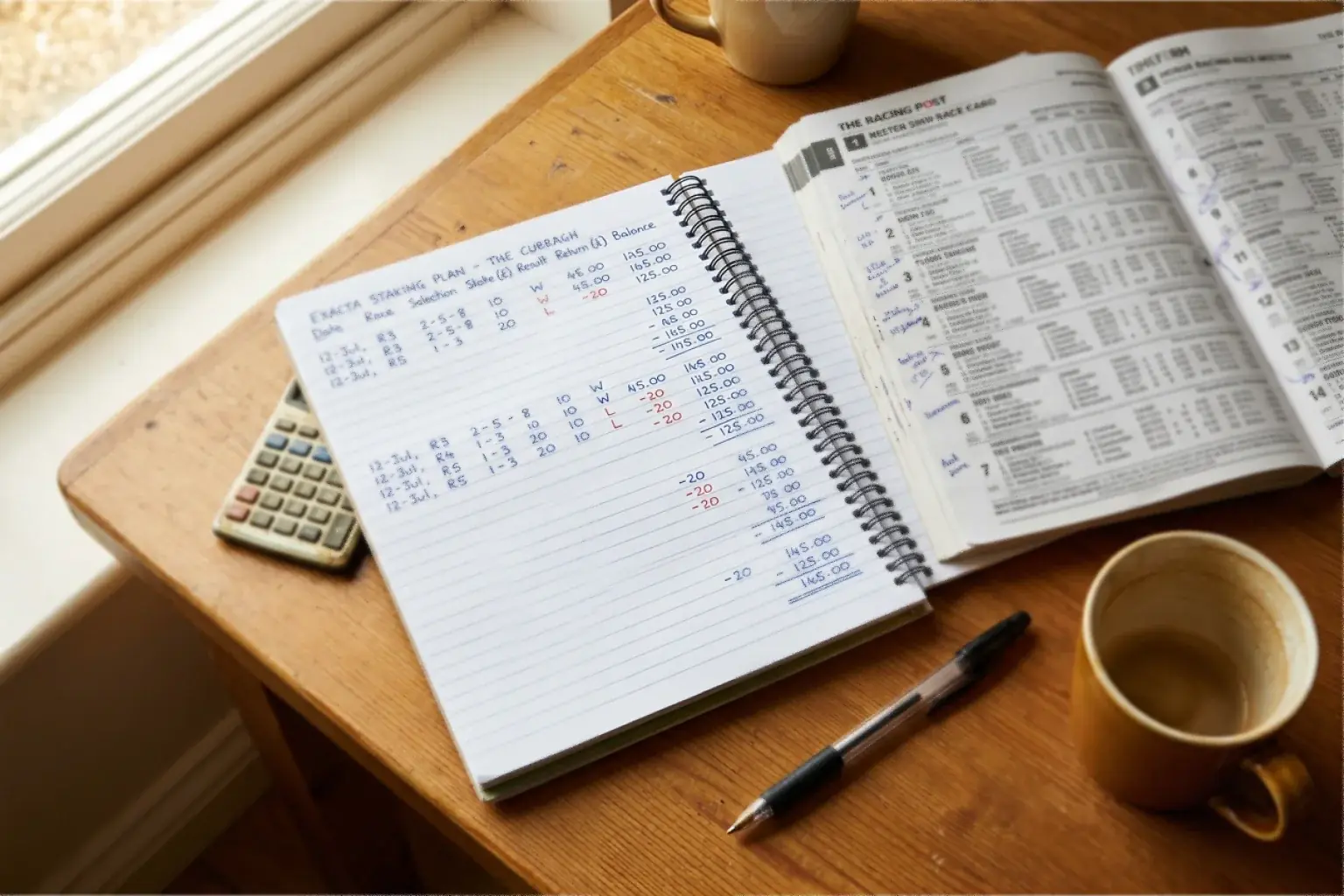
First, I identify my target combinations – typically 2-4 pairings I consider plausible on form. Second, I estimate each combination’s probability by multiplying my assessed win chance for the first horse by my conditional second-place chance for the second horse. Third, I calculate the break-even dividend for each combination. Fourth, I check the Tote’s indicative dividends – if available – or use the quick market price method to estimate the likely dividend. Fifth, I compare the estimated dividend to the break-even figure. Only combinations where the estimated dividend exceeds the break-even by at least 20% make it into my final ticket.
That 20% buffer is important. The pool will shift between my estimate and the final settlement, the probability assessments contain uncertainty, and the 25% deduction is a structural headwind that erodes marginal edges. Demanding a 20% premium above break-even ensures that my bets carry a genuine expected profit margin rather than teetering on the edge of neutral value.
Over a season of exacta betting, this routine eliminates roughly a third of the bets I would otherwise place. The bets it eliminates are consistently the ones with compressed dividends and marginal probability edges – exactly the bets that produce the leanest returns and contribute most to long-term losses. Cutting them from the portfolio improves the overall return on investment without requiring any change to the selection process itself. The calculator does not pick winners – it prevents you from backing winners at the wrong price, which in pool betting amounts to the same thing. A deeper understanding of how the Tote calculates and declares its exacta dividends sharpens every step of this estimation process. Feed your calculator with data from reading the Tote exacta pool.
How do I calculate an exacta dividend before the race?
The quickest method is to multiply the approximate win odds of your two selections and apply a 0.6-0.8 multiplier. For example, a 6/1 and 10/1 combination gives a product of 77, and a 0.7 multiplier estimates a dividend around 54 per 1 unit. For more precision, use the Tote’s indicative dividends if available, or reverse-engineer from the total pool size and the estimated share on your combination.
What is a good break-even dividend for an exacta bet?
The break-even dividend depends on your assessed probability for the combination. Divide 1 by the probability to get the break-even. A combination with a 3% chance needs a dividend of at least 33 to break even. Aim for dividends at least 20% above break-even to account for estimation uncertainty and pool shifts before settlement.
Created by the ”Horse Racing Exacta bet” editorial team.