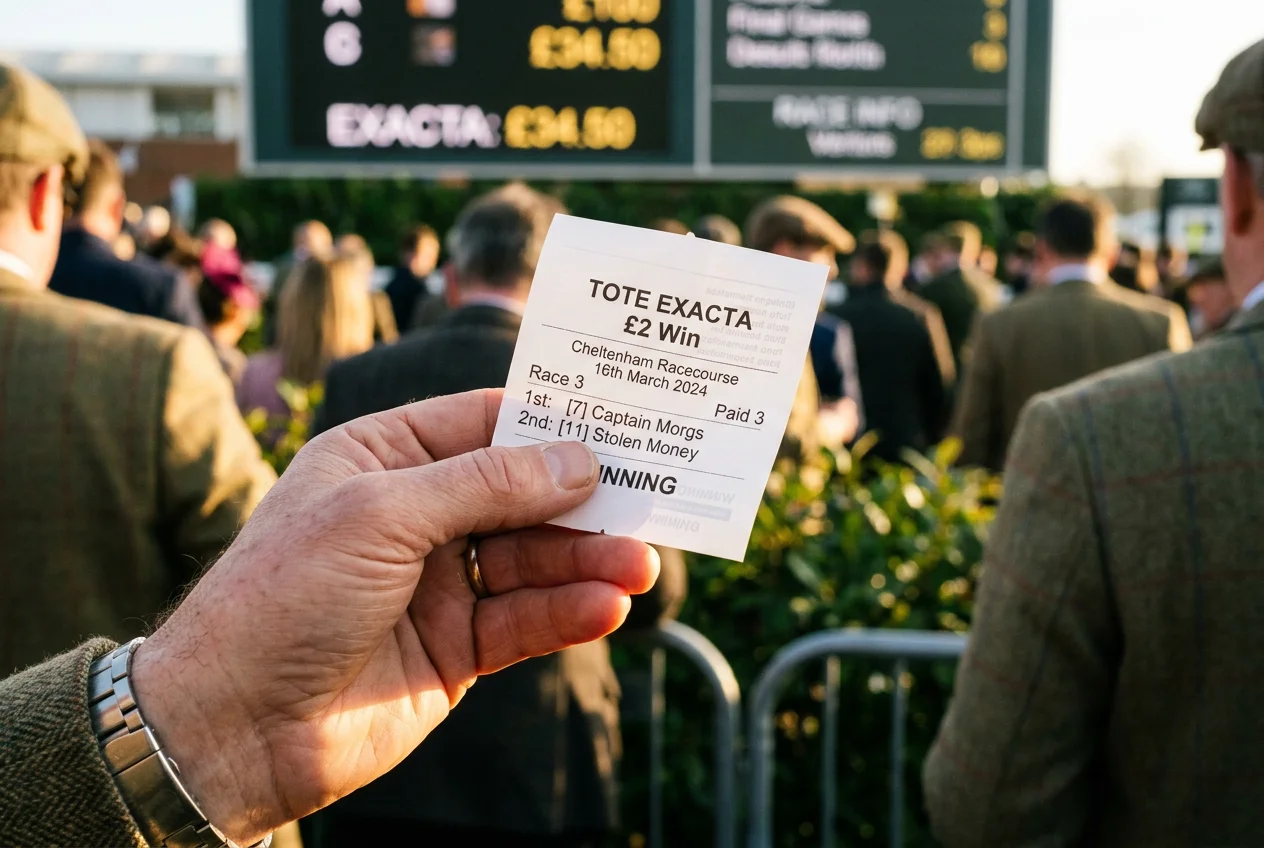
Straight Exacta vs Box Exacta: Costs, Odds and When to Use Each
 Available in US
I placed my first straight exacta at Newbury in 2019 and got it wrong by one position. The horse I had pencilled in for second stormed home first, and the one I had down to win ran a solid second. Had I boxed that bet, I would have collected. Instead I walked away with nothing, muttering about the importance of format selection. That afternoon taught me something every exacta bettor learns eventually – choosing between a straight and a boxed exacta is not a detail, it is the decision that shapes your entire risk profile. See also: horse racing exacta bet for exacta bet types.
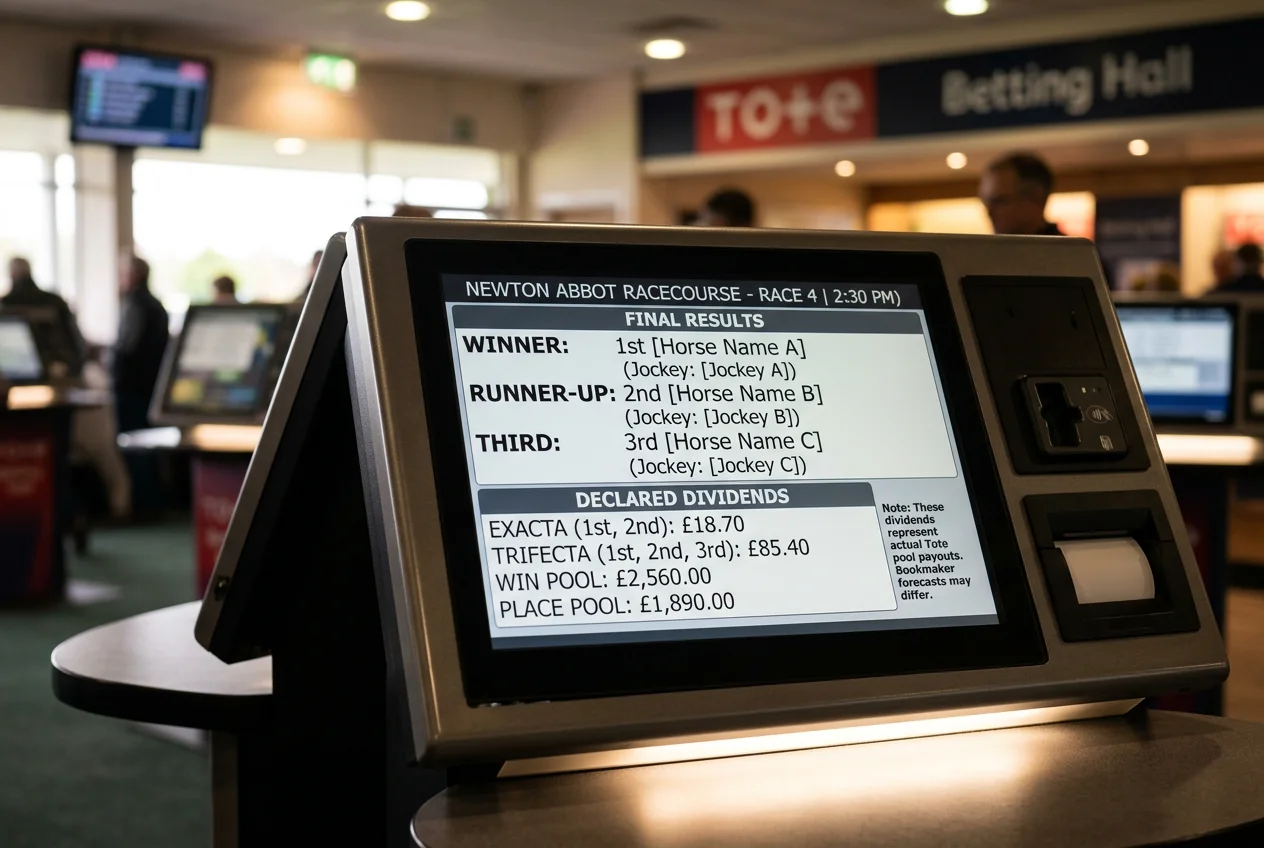
The Tote applies a 25% deduction to the UK Exacta pool before dividends are distributed. That is a bigger bite than the Win pool takes, and it means every penny you spend on unnecessary combinations is a penny working against you at worse odds. Understanding where a straight exacta saves you money and where a box keeps you alive is the difference between a disciplined approach and an expensive guessing game.
This guide strips the straight-versus-box question down to hard numbers. I will walk through the mechanics of each format, lay out UK-specific cost tables, compare real-world payout dynamics, and give you a practical framework for choosing one over the other based on what you actually see in the form book and on the track.
How the Straight Exacta Actually Works
A few years ago I watched a punter at Ascot agonise over two horses in a maiden race. He liked them both, but he was certain – absolutely certain – which one would finish ahead of the other. He placed a straight exacta for a single unit stake, and when his pair crossed the line in exactly the order he predicted, the Tote paid a dividend north of 40 to 1. A boxed version of the same bet would have halved his return per unit. That confidence paid for his entire day.
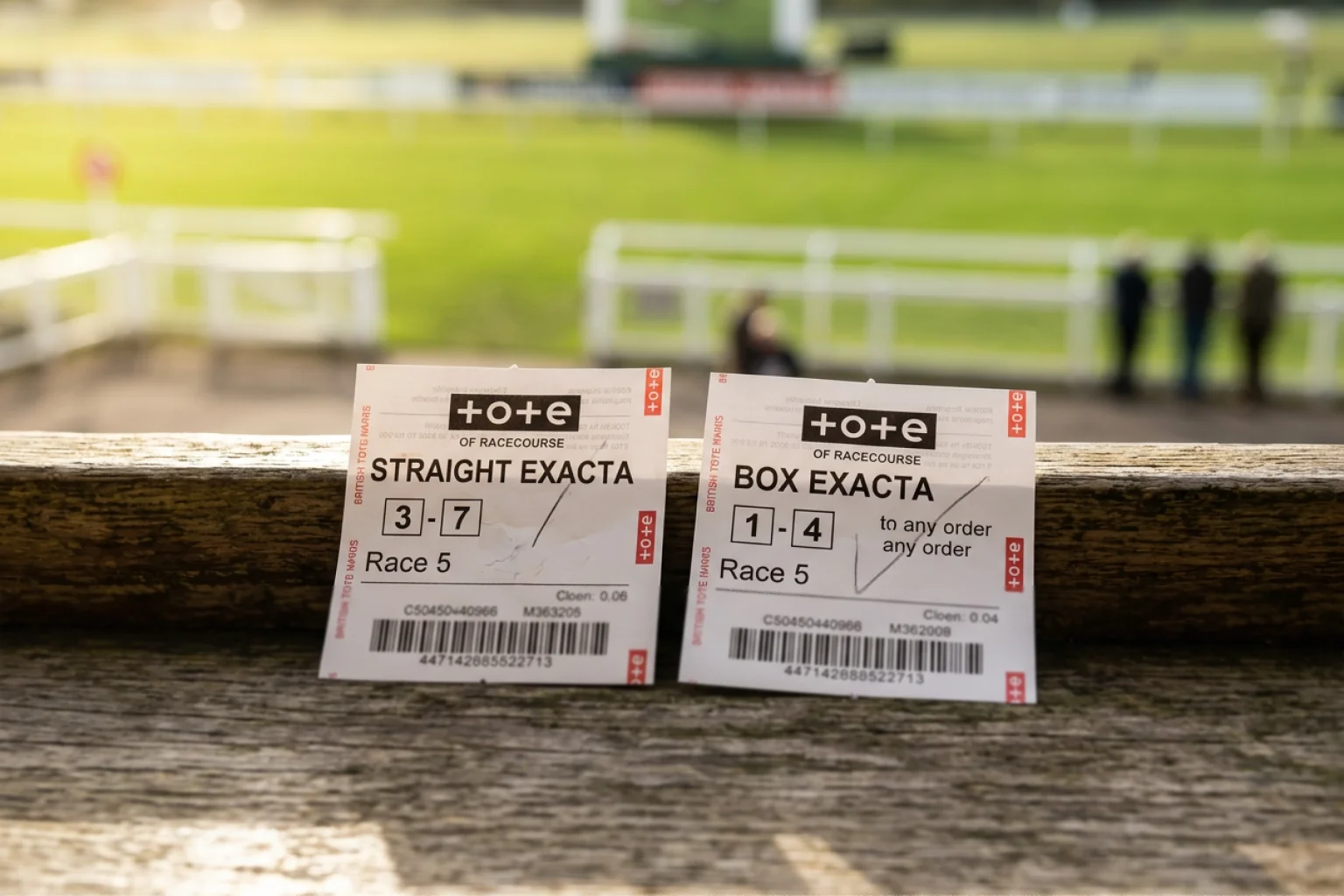
A straight exacta is the purest form of the bet. You select one horse to finish first and a different horse to finish second, in that precise order. There is no safety net, no second chance. If your first pick finishes second and your second pick finishes first, you lose. The simplicity is the point: you are buying exactly one combination out of all possible finishing pairs, and the pool rewards you accordingly.
On the UK Tote, a straight exacta costs one unit stake. The minimum unit online is typically one pound, though some platforms allow stakes as low as 10p per unit. Because you are purchasing a single combination, your total outlay equals your unit stake. Place a straight exacta at two pounds per unit and you spend two pounds – nothing more.
The mathematical appeal is straightforward. In a ten-runner race there are 90 possible exacta combinations (10 horses that could win multiplied by 9 remaining horses that could finish second). When you bet a straight exacta, you hold one of those 90 outcomes. If the pool distributes evenly – it never does, but the principle holds – your theoretical share is far larger than if you held multiple combinations covering the same pair. That concentration of risk is also a concentration of reward.
Where the straight exacta becomes genuinely powerful is in races where you have a strong directional view. Maybe the form points to a clear frontrunner who is unlikely to be headed, but the race for second is wide open. Or perhaps you have identified a pace scenario where a closer figures to overhaul the early leader in the final furlong, setting up a specific finishing order. In either case, the straight format lets you express that opinion without diluting it across combinations you do not actually believe in.
The risk, of course, is binary. Right order, you collect. Wrong order, you do not. There is no partial payout, no consolation dividend. That all-or-nothing quality makes the straight exacta the format of choice for bettors who do genuine form analysis rather than spreading their money across every plausible permutation. If your handicapping skills do not extend to separating first from second with any confidence, this format will punish you quickly.
Inside the Boxed Exacta
The first time I boxed an exacta I did it out of pure cowardice. I liked two horses at Cheltenham but could not separate them, and the idea of picking the wrong order in a race where I was otherwise spot on felt unbearable. The box covered both permutations – Horse A first with Horse B second, and Horse B first with Horse A second – and when they filled the first two places in the reverse of what I expected, the bet still landed. Cowardice, it turned out, was good risk management.
A boxed exacta takes the same pair (or larger group) of horses and covers every possible finishing order among them. With two horses, boxing creates two combinations. With three horses, it creates six. With four, twelve. The formula is simple: the number of horses multiplied by one fewer than the number of horses. Three horses give you 3 times 2, which is 6 combinations. Four give you 4 times 3, which equals 12. Each combination costs one unit stake, so boxing multiplies your total outlay by the number of permutations.
That cost escalation is the trade-off. A two-horse box at one pound per unit costs two pounds – perfectly manageable. A five-horse box at the same unit stake creates 20 combinations and costs twenty pounds. A six-horse box balloons to 30 combinations and thirty pounds. The coverage expands, but so does the investment, and every additional horse you include is subject to the same 25% pool deduction eating into your potential returns.
What boxing buys you is flexibility in races where predicting the exact finishing order is unrealistic. Handicaps with closely matched runners, novice hurdles where unexposed horses could improve dramatically, big-field flat races on soft ground where pace collapses are common – these are all scenarios where even experienced analysts struggle to separate first from second. The box acknowledges that uncertainty and prices it into the bet.
There is a subtle psychological trap with boxed exactas, though. Because the format covers multiple outcomes, it can feel safer than it actually is. A four-horse box in a 14-runner race gives you 12 combinations out of 182 possible – roughly a 6.6% coverage rate. That is better than a single straight combination’s 0.5%, but it is nowhere near the certainty some bettors assume when they see four familiar names on their slip. The box protects against order uncertainty within your selected group; it does nothing if the winner comes from outside your selection entirely.
I have also seen bettors box five or six horses as a way of “covering the field” when they genuinely have no opinion about the race. This defeats the purpose. The whole value proposition of an exacta – the reason the dividends are larger than win or place payouts – rests on the difficulty of the prediction. If you remove that difficulty by boxing half the field, you are paying a premium for what amounts to a low-margin gamble. The pool deduction alone makes wide boxing a losing strategy over time unless you are deliberately targeting specific high-value scenarios.
UK Tote Cost Tables: What You Will Really Pay
Numbers on a page never lie, and this is where the straight-versus-box debate stops being theoretical. I keep a spreadsheet of every exacta I place, and the cost column is the one that tells me whether my approach is sustainable. Let me lay out exactly what each format costs on the UK Tote, because most guides I have read either skip this entirely or use American pari-mutuel pricing that does not apply here.
A straight exacta always costs exactly one unit stake. If your unit is one pound, the bet costs one pound regardless of field size. If your unit is 50p, it costs 50p. The cost is fixed because you are buying a single combination.
Two-Horse Box
Combinations: 2. At a one-pound unit stake, total cost is two pounds. At 50p per unit, one pound. At 10p per unit, 20p. This is the cheapest box available and the most common among casual bettors. You are simply covering both possible orders for a pair you fancy.
Three-Horse Box
Combinations: 6. At one pound per unit, six pounds. At 50p, three pounds. At 10p, 60p. This is where the cost starts to climb noticeably. You have tripled the number of combinations by adding just one horse.
Four-Horse Box
Combinations: 12. At one pound per unit, twelve pounds. At 50p, six pounds. At 10p, one pound 20p. Four-horse boxes are popular for competitive handicaps where separating the leading contenders feels like guesswork. The 12-combination cost is substantial enough that I rarely go above 50p per unit here unless the race conditions strongly favour large dividends.
Five-Horse Box
Combinations: 20. At one pound per unit, twenty pounds. At 50p, ten pounds. At 10p, two pounds. A five-horse box starts entering territory where you need to ask whether the potential dividend justifies the outlay. In a race with average UK flat field sizes around 8.90 runners, boxing five horses means you are covering more than half the realistic contenders.
Six-Horse Box and Beyond
Combinations: 30. At one pound per unit, thirty pounds. At 50p, fifteen pounds. At 10p, three pounds. Seven horses produce 42 combinations; eight produce 56. The growth is relentless, and at these levels the cost almost always outweighs the expected return unless you are targeting a very specific type of race with historically inflated dividends.
The pattern that emerges from these tables is clear. Every additional horse you include in a box adds a disproportionate number of combinations relative to the previous step. Going from a three-horse box to a four-horse box doubles your cost from 6 to 12 combinations. Going from four to five adds another 8. The marginal cost of each extra horse increases because that horse creates new permutations with every horse already in the box, not just with one of them.
This is why unit stake management matters so much with boxed exactas. On the UK Tote, the ability to bet in smaller units – 10p or 20p – is a genuine structural advantage. It lets you box four or five horses for a total outlay that matches what a straight exacta would cost at one pound. The dividend you receive is proportional to your unit stake, so a winning 10p box pays one-tenth of what a one-pound box would, but your risk exposure is dramatically lower. I have found over six years that using smaller units on wider boxes and larger units on straight or two-horse box exactas produces a more consistent return profile than applying the same unit stake regardless of format.
Payout Comparison: Straight vs Box Returns
Here is a question that trips up more bettors than any other: does boxing an exacta always cut your payout in half? The short answer is no, and the reason reveals something important about how pool dividends actually function.
A Tote Exacta dividend is declared as a return to a one-pound unit stake. If the declared dividend is 45 pounds and you placed a straight exacta at one pound, you receive 45 pounds. If you placed a two-horse box at one pound per unit, your winning combination also pays 45 pounds – but you spent two pounds total, so your net return is 43 pounds. Your profit per pound staked is lower, but the actual dividend on the winning combination is identical to what the straight bettor received. The box does not halve the payout; it halves the profit margin because you paid for an extra combination that did not win.
That distinction matters enormously when you look at actual UK Tote data. Across a sample of 3,270 turf flat races, the average Exacta dividend came in at 102 pounds 44 pence, compared to 61 pounds 50 pence for the Computer Straight Forecast on the same races. The Exacta paid more in 63% of those races, and the average premium was 67% above the CSF figure. Those numbers mean a straight exacta bettor collecting the full dividend captured significantly more value than someone taking the CSF alternative – and even a two-horse box bettor, after accounting for the double outlay, still came out ahead of the CSF in the majority of races.
The payout dynamics shift as you widen the box. A three-horse box costs six units, so your effective return on a 102-pound dividend drops to roughly 96 pounds profit on a six-pound outlay – still excellent, but the ratio of profit to stake falls from around 101 to 1 on a straight bet to 16 to 1 on the box. A four-horse box at 12 units turns the same dividend into approximately 90 pounds profit on 12 spent – a 7.5 to 1 return. Still profitable, but the diminishing returns are visible.
Where this gets interesting is in races with longer-priced winners. When a 20-to-1 shot beats a 33-to-1 shot, exacta dividends can run into hundreds or thousands of pounds. In those scenarios, a four-horse or five-horse box that catches the result can still deliver extraordinary returns despite the higher outlay. I recall a handicap at York where the exacta paid over 800 pounds to a one-pound unit. A five-horse box at 50p per unit would have cost ten pounds and returned 400 pounds – a 40-to-1 profit ratio. Catching that result with a straight exacta would have required identifying both horses in the correct order, a near-impossible task in a 16-runner handicap.
The practical lesson is that payout comparison between straight and boxed formats depends entirely on the expected dividend size relative to your total outlay. In short-priced exactas where the dividend might be 8 or 12 pounds, a four-horse box costing twelve pounds barely breaks even. In open races where dividends regularly exceed 50 pounds, even wider boxes can generate strong returns. Matching your format to the race profile is not optional – it is the core skill of exacta betting.
When to Choose Straight and When to Box
Three minutes before the off at Sandown last autumn, I changed a straight exacta to a box. The horse I had down to win was drawn wide in stall 14 on soft ground, and the jockey booking on my second pick had been changed that morning. Two pieces of late information shifted my confidence from “I know the order” to “I like this pair but cannot separate them.” The box was the right call – they finished first and second in the reverse of my original order, and the boxed bet paid well enough to make the afternoon profitable.
That story illustrates the framework I use for choosing between formats. The decision is not about personality or risk tolerance in the abstract. It is about the specific race conditions and the quality of the information you hold about finishing order, not just finishing position.
Favourites in British racing win approximately 30 to 35% of all races, and the second favourite lands around 18 to 21% of the time. When a strong favourite is involved, the likelihood of that horse finishing first is high enough to justify a straight exacta with the favourite on top and a selection underneath. The order question is partially answered by the market itself – if a horse is 4/6 and clearly the class act in the field, predicting it to finish first is not a stretch. Pairing it with your idea for second in a straight format keeps costs low and concentrates your exposure on the exact outcome you believe in.
The straight exacta also makes sense in small-field races where form lines are well established. A five-runner Group race where two horses have met three times before, with one always finishing ahead of the other, is a prime candidate. The order question has a historical answer, and the small field limits the number of possible permutations, making the dividend smaller but the probability higher.
Switch to a box when any of the following conditions apply. First, you are looking at a competitive handicap with six or more closely matched runners. Premier flat fixtures average 11.02 runners per race – that kind of field depth makes precise order prediction extremely difficult. Second, the pace scenario is uncertain. If two or three horses could make the running and you are unsure which one will kick clear or which one will fade, the finishing order between your fancied pair becomes a coin flip. Third, you are dealing with unexposed horses or first-time conditions (first run on heavy ground, first try over a new distance, first time in a visor). These variables introduce genuine randomness into finishing positions.
There is also a staking dimension. If your bankroll for the day is 50 pounds and you want to play four races, spending twelve pounds on a four-horse box in race one leaves you compromised for the rest of the card. A straight exacta or two-horse box in the first race preserves capital for later opportunities. I budget my exacta bets as a percentage of the day’s bankroll – never more than 15% on a single race – and let that constraint dictate the format. Some days that means nothing but straight exactas. Other days, one or two carefully chosen boxes are affordable within the limit.
An Odds Shark handicapper once described the exacta as his favourite wager because the takeout rates are lower than trifectas and superfectas, and finding the first two finishers is considerably easier than identifying the top three or four. That logic applies equally to the format question: the straight exacta has the lowest cost and the highest dividend per unit, making it the default choice. The box exists for situations where your analysis tells you the pair but not the order – and that distinction should be the only reason you reach for it.
Beyond the Binary: Partial Boxing and Keying
Most guides frame the exacta choice as binary – straight or box, pick one. But the bettors I know who consistently find value in Tote pools rarely use either format in its pure form. They key horses, they partial-box, and they structure bets that reflect the specific shape of their opinion rather than forcing it into a generic template.
Keying means selecting one horse for a fixed finishing position and combining it with multiple horses in the other position. If you are confident that Horse A will win but unsure whether Horse B, C, or D will finish second, you key Horse A on top with B, C, and D underneath. That creates three combinations – A/B, A/C, A/D – at a cost of three unit stakes. Compare this to a four-horse box covering A, B, C, and D, which produces 12 combinations. Keying cuts your cost by 75% while still capturing every scenario where your banker wins and one of your secondary picks fills the runner-up spot.
The key approach is particularly effective in races where the likely winner is obvious but the battle for second is wide open. Class 2 handicaps at Premier meetings often feature a well-handicapped horse near the top of the weights who is expected to dominate, with a cluster of mid-range contenders scrapping for minor positions. Keying that class horse in first and spreading three or four underneath gives you a targeted bet at a fraction of box cost.
You can also key in reverse – fixing a horse in second place and combining it with multiple first-place options. This works in scenarios where a consistent place horse keeps running second without ever winning. Every yard has one: the horse that always hits the frame but cannot find the front. Keying that type in second and backing two or three potential winners on top can be a shrewd angle, especially at meetings where the place horse’s connections have stopped trying to win and are content collecting place prize money.
Partial boxing sits between a full box and a key. You select a group of horses but restrict which positions each can occupy. For example, you might box three horses for the win (A, B, C) but only allow two of them (B, C) to fill the second spot. This creates fewer combinations than a full box while still providing flexibility in the positions you are less certain about. Partial boxes require a bit more thought to structure, but they reward bettors who have a layered opinion – “I think one of these three will win, but if A wins, only B or C could be second, not D.”
The cost savings from keying and partial boxing accumulate over a season. If you place 50 exactas a year and keying saves an average of four units per bet compared to boxing, that is 200 units preserved – money that stays in your bankroll rather than funding combinations you never believed in. I have been tracking this for three seasons now, and the keyed format consistently outperforms the full box on return-on-investment, even though the box catches a handful of results that the key misses. The maths favours precision over coverage, and a disciplined exacta strategy starts with understanding these intermediate formats. If order is uncertain, consider a reverse exacta with both permutations.
Frequently Asked Questions
Does boxing an exacta always halve the payout per unit stake?
No. The Tote dividend is declared per one-pound unit, so the winning combination in a box pays the same dividend as a straight exacta on that combination. What changes is your total outlay – a two-horse box costs twice as much as a straight, so your profit per pound staked is lower, but the dividend itself is not halved.
How many combinations are in a five-horse exacta box?
A five-horse box creates 20 combinations. The formula is 5 multiplied by 4, giving 20. At one pound per unit, the box costs 20 pounds. At 10p per unit, it costs two pounds.
Can I box more than four horses on the UK Tote?
Yes. The Tote allows boxes with up to the full field, though the number of combinations and the total cost rise sharply. A six-horse box has 30 combinations, a seven-horse box has 42, and an eight-horse box has 56. Most experienced bettors cap their boxes at four or five horses and use keying or partial boxing to manage larger selections.
Is a straight exacta riskier than a boxed exacta?
A straight exacta is riskier in the sense that it covers only one finishing order, while a box covers multiple orders. However, the straight format costs less, which means a losing straight bet has a smaller financial impact than a losing box. The real risk question is whether your analysis supports predicting the exact order or only the pair.
Created by the ”Horse Racing Exacta bet” editorial team.